Memo Matrix's BCAA 2:1:1 Blend: What 540mg of Leucine, Isoleucine and Valine Actually Does
Quick Answer: What Does the BCAA 2:1:1 Blend in Memo Matrix Do?
Not exactly what you might expect from a memory supplement. Memo Matrix's label prints "Branched Chain Amino Acids 2:1:1 (L-Leucine, L-Isoleucine, L-Valine) — 540 mg" per serving — the ratio and combined total, but not the individual leucine/isoleucine/valine split. The published BCAA research behind that ingredient is concentrated almost entirely in exercise and sports-recovery settings (muscle soreness, and a fatigue-perception mechanism during endurance exercise), not in memory or cognition studies in non-exercising adults. That is a real evidence gap between what BCAA research shows and what a nootropic-context claim implies.
- What's printed: 540 mg total, 2:1:1 leucine:isoleucine:valine ratio — not broken down by individual amino acid.
- What the research covers: mostly exercise recovery and a fatigue-perception mechanism during physical exertion.
- What's missing: direct evidence that this dose, in this form, improves memory or focus in someone who isn't exercising.
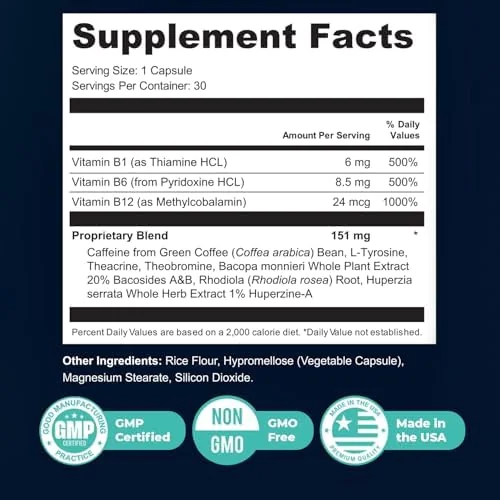
What is actually printed on the Memo Matrix label
The Memo Matrix Supplement Facts panel (label REV. 11/25) lists, as the first and by far the largest line item, "Branched Chain Amino Acids 2:1:1 (L-Leucine, L-Isoleucine, L-Valine) — 540 mg" per two-capsule serving. That single line accounts for a little over half of the roughly 1,030 mg of actives the label prints across its five ingredients. The "2:1:1" is a ratio — two parts leucine to one part isoleucine to one part valine, the classic branched-chain amino acid (BCAA) split used in sports-nutrition products — but the label does not break the 540 mg down into the three individual amino-acid amounts. It states the ratio and the combined total; it does not print, for example, "270 mg leucine, 135 mg isoleucine, 135 mg valine." That per-amino split is genuinely not on the label, and any number you see for it elsewhere is an estimate, not a fact from this product's panel.
It's worth saying plainly what this ingredient is not. It is not a proprietary blend in the sense the FDA regulates that term — each of the five ingredients on the Memo Matrix panel, including the BCAA line, carries its own printed milligram amount rather than being buried inside a single combined weight with other actives. That is a genuine point in the label's favor. But "not a proprietary blend" and "fully disclosed" are two different claims, and the BCAA line sits in between: the total is disclosed, the ratio is disclosed, the internal split by individual amino acid is not.
What BCAAs are, and why the 2:1:1 ratio is the default
Leucine, isoleucine and valine are three of the nine essential amino acids, meaning the body cannot synthesize them and they must come from food or supplements. What separates them from the other six essential amino acids is a branched molecular side chain and, more importantly for supplement formulation, that they are metabolized differently — largely in skeletal muscle rather than being processed first by the liver, which is why they show up quickly in the bloodstream after ingestion. Leucine in particular is the amino acid most strongly tied to activating a cellular pathway (mTOR) involved in initiating muscle protein synthesis, which is the biochemical reason leucine is usually the largest of the three in any BCAA ratio. A 2:1:1 ratio — roughly twice as much leucine as isoleucine or valine — has become the default in the sports-nutrition category for that reason, though some products use higher leucine ratios such as 4:1:1 or 8:1:1 on the theory that more leucine means a stronger anabolic signal. Memo Matrix uses the more traditional 2:1:1 split.
What the published BCAA research actually measured
Here is the honest context that matters most for anyone taking Memo Matrix for memory, focus or general cognitive support: the large majority of controlled human research on BCAA supplementation was conducted in exercise and sports-performance settings, not cognitive ones. That is not a criticism of the ingredient — it simply describes where the evidence base actually sits, and it means a BCAA line on a nootropic-branded label is drawing on research that was not designed to test cognition.
Two threads of that exercise literature are the ones most often cited in BCAA marketing, and both hold up reasonably well on their own terms. The first is delayed-onset muscle soreness (DOMS) and exercise-induced muscle damage. A 2021 meta-analysis in the International Journal for Vitamin and Nutrition Research pooling multiple randomized trials found that BCAA supplementation modestly reduced perceived muscle soreness following exercise compared with placebo. A separate 2021 meta-analysis of randomized controlled trials in resistance-trained men, published in Nutrients, reported a similar pattern: BCAA supplementation was associated with reduced soreness and some muscle-damage markers after resistance exercise, though the effect sizes were generally modest and the reviewed trials varied considerably in dose, timing and the training status of participants.
The second thread is the "central fatigue hypothesis," which is the closest the BCAA literature comes to a brain-related mechanism, and it is worth explaining carefully because it is easy to overstate. During prolonged exercise, plasma levels of free tryptophan can rise relative to BCAAs. Because tryptophan and BCAAs compete for the same transporter across the blood-brain barrier, a lower BCAA-to-tryptophan ratio in the blood is theorized to let more tryptophan into the brain, where it is converted to serotonin — a neurotransmitter implicated in the perception of fatigue during sustained physical effort. The reasoning, laid out in a well-known pair of 2006 papers in the Journal of Nutrition by Eric Newsholme and Eva Blomstrand, is that raising blood BCAA levels through supplementation could blunt that brain tryptophan/serotonin rise and, in theory, delay the sensation of fatigue during endurance exercise.
This is the mechanism most likely to get stretched into a cognitive-enhancement claim, and it deserves a precise reading. The central fatigue hypothesis is about exercise-induced fatigue perception during sustained physical exertion — not about memory formation, attention, working memory or any of the cognitive domains a nootropic product is typically marketed against. It is also a hypothesis with mixed support: some exercise trials find the predicted effect on perceived exertion, others find little difference in actual performance outcomes once other exercise-nutrition variables are controlled. It is not, on the evidence as published, a demonstrated memory or focus intervention in a sedentary or cognitively-taxed (rather than physically-exercising) person.
The evidence at a glance
| What was studied | What the trials generally show | Does it support a memory/cognition claim? |
|---|---|---|
| Muscle soreness / exercise-induced damage | Modest reduction in soreness with BCAA supplementation around exercise | No — physical recovery, not cognition |
| Central fatigue hypothesis (endurance exercise) | Plausible mechanism; mixed results on actual performance | Indirect at best, and specific to physical exertion |
| Memory, attention or working memory in non-exercising adults | Not the population or outcome most BCAA trials studied | Evidence gap — largely untested at this dose |
The gap between the research and a nootropic-context claim
The honest summary is that BCAA research is real, it is reasonably well replicated, and it says something meaningful — about exercise recovery and, more tentatively, about fatigue perception during sustained physical activity. What it does not directly say anything about is whether 540 mg of BCAAs in a capsule, taken by someone who is not exercising, will measurably improve memory, focus or any other outcome a nootropic buyer is looking for. If Memo Matrix's BCAA line is doing anything for the cognitive claims on the sales page, the most plausible pathway is the indirect one described above — and it is a pathway studied in the context of physical exertion, not quiet mental work at a desk. There is a real difference between "this ingredient has published research" and "this ingredient has published research that supports the specific claim on this label," and BCAAs in Memo Matrix sit closer to the first than the second.
It is also worth putting 540 mg in context against the sports-nutrition literature, where BCAA doses studied for exercise outcomes commonly range from about 5 to 20 grams per day, frequently taken around a training session rather than as a once-daily 540 mg dose. That is not a criticism of the Memo Matrix amount specifically — a nootropic capsule is not positioned as a sports-nutrition product and was never going to match a pre-workout dosing protocol — but it is a useful anchor for calibrating expectations. At 540 mg total, the BCAA line here is well below the range most exercise trials used, on top of being tested for a different outcome altogether.
Reading the label honestly
None of this means the BCAA 2:1:1 blend is a wasted ingredient or a filler; amino acids are broadly safe at typical supplemental doses and do have a real, if narrow, evidence base. What it means is that the specific claim implied by putting a BCAA line at the top of a memory-and-focus label — that it will help you think or remember better — is not the claim the published BCAA research was designed to test. The 2:1:1 ratio and the 540 mg total are exactly what the panel prints; the per-amino breakdown is not printed, and the cognitive benefit is not the outcome most BCAA trials measured. If you are taking Memo Matrix and want to know what the BCAA line is contributing, the most defensible answer is: possibly a small amount of recovery support if you are also physically active, and an unproven contribution to the memory and focus claims on the sales page.
Medical note: this article is general information, not medical advice. Branched-chain amino acids are broadly well tolerated, but people with certain metabolic conditions, or who are pregnant, nursing or taking medication, should speak with a healthcare professional before starting any new supplement, including Memo Matrix.
Scientific references
- Blomstrand E. — A role for branched-chain amino acids in reducing central fatigue, Journal of Nutrition (2006)
- Newsholme E.A., Blomstrand E. — Branched-chain amino acids and central fatigue, Journal of Nutrition (2006)
- Fedewa M.V., Spencer S.O., Williams T.D. et al. — Effect of branched-chain amino acid supplementation on muscle soreness following exercise: a meta-analysis, International Journal for Vitamin and Nutrition Research (2019)
- Khemtong C., Kuo C.H., Chen C.Y. et al. — Does branched-chain amino acids (BCAAs) supplementation attenuate muscle damage markers and soreness after resistance exercise in trained males? A meta-analysis of randomized controlled trials, Nutrients (2021)
- Memo Matrix Ingredients — the full Supplement Facts panel, line by line
Frequently asked questions
Does Memo Matrix's label say how much leucine, isoleucine and valine are in the BCAA blend?
No. The label prints the 2:1:1 ratio and the 540 mg combined total for Branched Chain Amino Acids (L-Leucine, L-Isoleucine, L-Valine), but it does not print the individual milligram amount of each of the three amino acids. Any specific per-amino figure you see elsewhere is an estimate, not a number from this label.
Is BCAA research actually about memory and cognition?
Mostly not. The bulk of controlled human research on BCAA supplementation looks at exercise recovery (muscle soreness, exercise-induced muscle damage) and a "central fatigue" mechanism tied to endurance exercise. Direct evidence that BCAA supplementation improves memory, attention or focus in non-exercising adults is limited.
Is 540 mg of BCAAs a meaningful dose?
It's on the low end compared with the sports-nutrition literature, where studied BCAA doses for exercise outcomes commonly run from about 5 to 20 grams per day, usually taken around a workout. 540 mg once daily is well below that range, though Memo Matrix isn't positioned as a sports-nutrition product.
Are BCAAs generally safe to take?
At typical supplemental doses, branched-chain amino acids are broadly considered safe for healthy adults. As with any supplement, people with certain metabolic conditions (such as maple syrup urine disease) or on specific medical diets should check with a physician first, and anyone pregnant, nursing or managing a health condition should do the same before starting Memo Matrix.
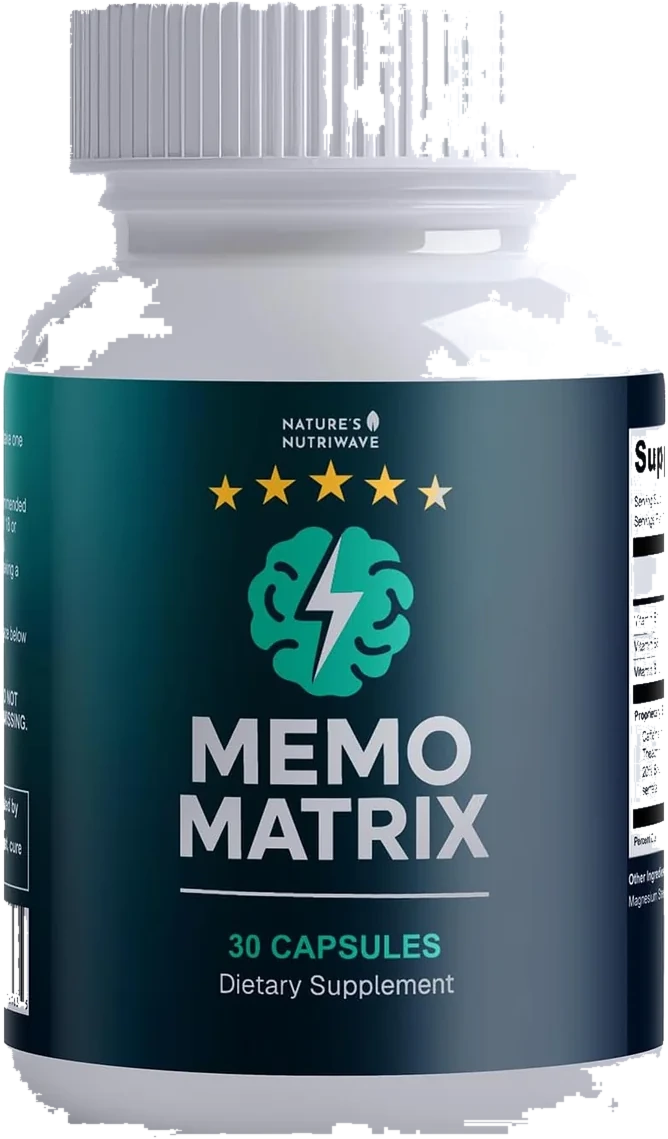
See the full Memo Matrix Supplement Facts panel
BCAA 2:1:1 (540 mg) is one of five individually-listed ingredients on the Memo Matrix label, alongside Bacopa Monnieri, Rhodiola Rosea, L-Theanine and Panax Ginseng.
Order Memo Matrix