Panax Ginseng in Memo Matrix: Trial Evidence and Who Should Check With a Doctor First
Quick Answer: What Does Panax Ginseng in Memo Matrix Do, and Who Should Be Cautious?
Panax Ginseng Extract on the Memo Matrix label is printed at 90 mg per serving, with no ginsenoside standardization percentage stated. PubMed-indexed research on Panax ginseng and cognition is genuinely substantial but mixed: a 2010 Cochrane review found the trial evidence too heterogeneous for a confident overall verdict, while individual trials using single doses in the 200–400 mg range (above this label's 90 mg) found dose- and glucose-dependent cognitive effects. Ginseng also has a real, published interaction profile — with anticoagulants like warfarin, with diabetes medications (ginseng independently affects blood glucose), and it is not established as safe in pregnancy — which is why the label's own instruction to consult a physician matters here specifically.
- What's printed: Panax Ginseng Extract, 90 mg per serving — no ginsenoside percentage stated.
- What the trials found: mixed but real cognitive effects at single doses of roughly 200–400 mg, above this label's amount.
- Who should check with a doctor first: anyone on anticoagulants or diabetes medication, and anyone pregnant or nursing.
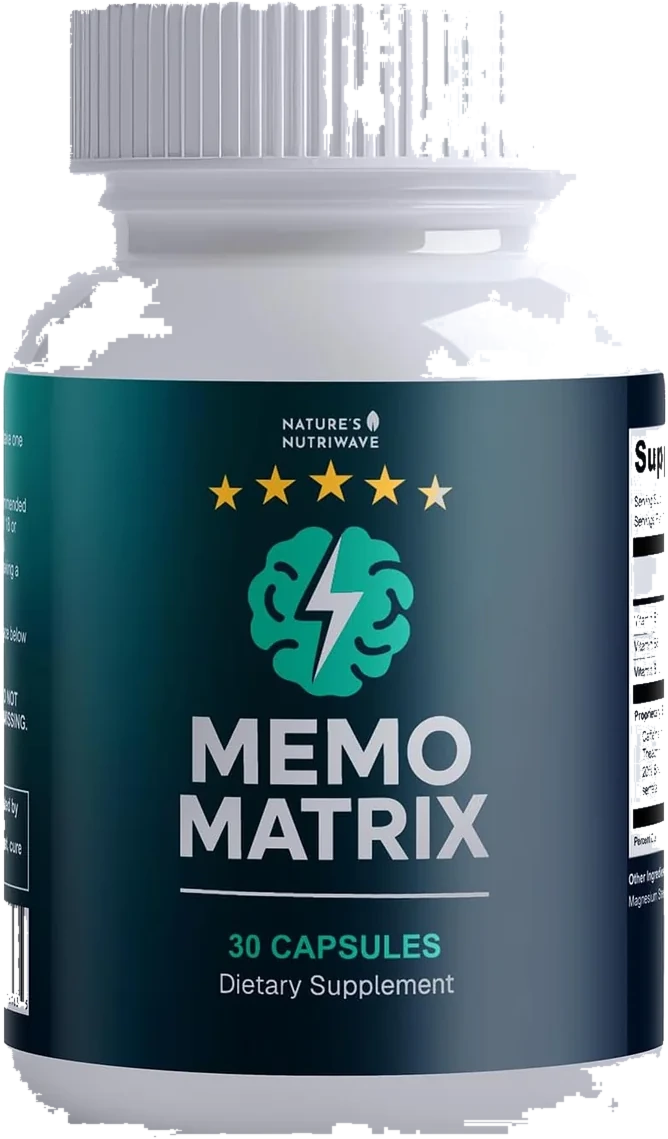
What the Memo Matrix label prints for Panax Ginseng
The fifth and final line on the Memo Matrix Supplement Facts panel (label REV. 11/25) reads "Panax Ginseng Extract — 90 mg" per two-capsule serving, marked, like every other ingredient on the panel, "Daily Value Not Established." As with the Bacopa line on this same label, the panel does not state a ginsenoside percentage — ginsenosides being the compound class Panax ginseng is conventionally standardized to — so there is no way to calculate the actual active-compound content from what's printed. The 90 mg figure describes the extract's total weight only.
It's also worth being precise about which ginseng this is. "Panax ginseng" specifically refers to Korean/Asian ginseng (Panax ginseng C.A. Meyer), which is a botanically and pharmacologically distinct plant from American ginseng (Panax quinquefolius) and from Siberian "ginseng" (Eleutherococcus senticosus, not a true Panax species at all). The research discussed below concerns Panax ginseng specifically, which is what this label names.
What PubMed-indexed ginseng research has shown for cognition
Panax ginseng has a genuinely large human research literature behind it, larger than most botanicals in the nootropic category, though the quality and consistency of that literature is uneven. A 2010 Cochrane systematic review by Geng and colleagues, titled simply "Ginseng for cognition," pooled randomized controlled trials testing Panax ginseng against cognitive outcomes in both healthy adults and people with cognitive impairment. Its conclusion was measured rather than enthusiastic: the reviewers found the existing trials too heterogeneous in ginseng species, preparation, dose and outcome measure to draw a confident overall verdict, though some individual trials reported improvements in specific cognitive domains, particularly working memory-type tasks measured shortly after dosing.
Two frequently cited trials from Reay, Kennedy and Scholey, published in 2006 in the British Journal of Nutrition and the Journal of Psychopharmacology, looked specifically at single-dose Panax ginseng and cognitive performance during sustained, mentally demanding tasks, with particular attention to blood glucose as a mediating factor. Those studies found that Panax ginseng could influence performance on demanding cognitive tasks and modulate blood glucose levels, with effects that were dose- and glucose-context dependent — meaning the cognitive effect wasn't simply "more ginseng, sharper focus," but was tangled up with how the ginseng interacted with blood sugar during the task. This is a genuinely interesting mechanistic thread, but it also means the cognitive-enhancement story for Panax ginseng is more conditional and dose-specific than a simple headline claim would suggest.
Comparing this literature to the Memo Matrix dose: the trials in the Reay/Kennedy/Scholey line of research used single doses in roughly the 200–400 mg range of standardized Panax ginseng extract, and other cognitive-effect trials in the broader literature have used comparable or higher single doses. Memo Matrix's 90 mg per serving sits below that commonly studied range, and — as with the label's Bacopa line — there is no ginsenoside percentage printed, so it isn't possible to know how the extract's standardization compares to what the cited trials used even before accounting for the lower raw milligram amount.
Ginseng cognition research at a glance
| Source | What was tested | Finding |
|---|---|---|
| Geng et al., Cochrane Database of Systematic Reviews (2010) | Pooled RCTs of ginseng for cognition, healthy and impaired adults | Some trials show benefit; evidence base too heterogeneous for a firm overall conclusion |
| Reay, Kennedy & Scholey, J Psychopharmacol (2006) | Single-dose Panax ginseng, sustained demanding cognitive tasks, glucose | Cognitive effects observed, dependent on dose and glucose context |
| Reay, Kennedy & Scholey, Br J Nutr (2006) | Single-dose Panax ginseng, glycaemic response | Ginseng measurably affects blood glucose — relevant to the interaction note below |
Interactions and who should check with a doctor first
Panax ginseng is not an inert botanical, and its published interaction profile is one of the more substantive ones among common nootropic ingredients — which is exactly why it deserves a careful reading rather than a marketing gloss. Three categories are worth naming specifically:
Anticoagulant and antiplatelet medications. A case report published in the American Journal of Health-System Pharmacy in 1997 by Janetzky and Morreale described a probable interaction between ginseng and warfarin, in which ginseng use was associated with a reduced anticoagulant effect. While a single case report is not proof of a general mechanism, it is exactly the kind of signal that leads clinical references to recommend caution when combining ginseng with blood-thinning medication, and it is consistent with the label's own instruction to consult a physician before use if you have a known medical condition.
Diabetes medications and blood sugar management. The Reay, Kennedy and Scholey research cited above demonstrated that Panax ginseng measurably affects blood glucose levels, including in single-dose, non-diabetic healthy volunteers. For anyone taking insulin or an oral glucose-lowering medication, an ingredient that independently moves blood sugar is a legitimate reason to involve a physician before adding it, both to watch for additive glucose-lowering effects and simply to know what's contributing to any change in readings.
Pregnancy and nursing. Panax ginseng has not been established as safe during pregnancy, and it is one of the ingredient categories most consistently flagged for avoidance in that population across clinical references. This lines up directly with the caution printed on the Memo Matrix label itself, which states that pregnant or nursing mothers, along with individuals under 18 or with a known medical condition, should consult a physician before use — a caution that applies to the whole product, and that the ginseng ingredient specifically reinforces.
Beyond these three, ginseng has also been associated in the literature with potential interactions involving MAO inhibitors and other stimulant-class substances, and with mild, dose-dependent effects such as insomnia or nervousness in sensitive individuals when taken later in the day. None of this means Panax ginseng is unusually dangerous at typical supplemental doses for a healthy adult — it means it belongs in the category of botanicals with a real, documented interaction profile rather than the category of "generally regarded as inert," and the label's blanket caution to check with a physician for anyone on medication is doing real work here, not just covering legal bases.
What isn't on the label
A few gaps are worth naming plainly rather than glossing over. The Memo Matrix panel does not state which Panax ginseng species or root age was used, does not print a ginsenoside percentage, and does not disclose an extraction ratio or solvent — all details that affect how directly a 90 mg line on this label can be compared to a given trial's dose. The label also does not identify the manufacturer, name a third-party testing lab, or reference a certificate of analysis, so none of that can be verified independently of what is printed on the bottle itself. None of this means the ingredient is absent or mislabeled; the Supplement Facts panel does list Panax Ginseng Extract with a specific milligram amount, which is more disclosure than a proprietary-blend listing would offer. It means that the standardization and sourcing questions that would let a buyer compare this line to the cited trials on fully equal terms simply aren't answered by the label, and shouldn't be assumed in either direction.
What this means for reading the Memo Matrix ginseng line honestly
Panax ginseng is one of the more genuinely researched ingredients on this label, and unlike the BCAA line covered elsewhere on this site, its research base does include direct human cognitive-performance testing rather than research borrowed from an unrelated context. But two honest qualifications belong alongside that: the overall evidence, per the Cochrane review, is too inconsistent across trials to call settled, and the 90 mg on this label sits below the doses most commonly used in the trials that did find a cognitive effect, with no ginsenoside standardization printed to compare against those trials on a like-for-like basis. Combined with a real, published interaction profile around anticoagulants, glucose-lowering medications and pregnancy, Panax ginseng is the ingredient on this panel most worth a conversation with a doctor before starting — not because the research is weak, but because where it is strong, it is strong enough to interact with things that matter.
Medical note: this article is general information, not medical advice. Panax ginseng has documented interactions with certain medications, including anticoagulants and diabetes medications, and is not established as safe during pregnancy or nursing. Speak with a healthcare professional before starting Memo Matrix if any of these apply to you, or if you are managing any medical condition.
Scientific references
- Geng J., Dong J., Ni H. et al. — Ginseng for cognition, Cochrane Database of Systematic Reviews (2010)
- Reay J.L., Kennedy D.O., Scholey A.B. — Effects of Panax ginseng, consumed with and without glucose, on blood glucose levels and cognitive performance during sustained 'mentally demanding' tasks, Journal of Psychopharmacology (2006)
- Reay J.L., Kennedy D.O., Scholey A.B. — The glycaemic effects of single doses of Panax ginseng in young healthy volunteers, British Journal of Nutrition (2006)
- Janetzky K., Morreale A.P. — Probable interaction between warfarin and ginseng, American Journal of Health-System Pharmacy (1997)
- Memo Matrix Ingredients — the full Supplement Facts panel, line by line
Frequently asked questions
Does the Memo Matrix label state a ginsenoside percentage for the ginseng?
No. The label prints "Panax Ginseng Extract — 90 mg" with no stated ginsenoside standardization, the same gap that applies to the Bacopa Monnieri line on this label. Without that percentage, the extract's actual active-compound content can't be calculated from the label alone.
What does PubMed research actually show for Panax ginseng and cognition?
It's a mixed but genuine evidence base. A 2010 Cochrane systematic review of randomized trials concluded the existing evidence was too heterogeneous in ginseng type, dose and outcome measure for a confident overall conclusion, though several individual trials found cognitive effects, particularly on demanding tasks and in combination with blood glucose changes, at single doses generally higher than the 90 mg used here.
Can Panax ginseng interact with medications?
Yes, and this is documented in the published literature rather than being a generic caution. A case report links ginseng to a reduced effect of the blood thinner warfarin, and controlled research shows Panax ginseng measurably affects blood glucose, which matters for anyone on insulin or oral diabetes medication. Anyone on these medication types should talk to a physician before taking a ginseng-containing product.
Is Panax ginseng safe during pregnancy?
It has not been established as safe during pregnancy or while nursing, and is generally flagged for avoidance in that population in clinical references. This matches the Memo Matrix label's own caution that pregnant or nursing mothers should consult a physician before use.
See every ingredient on the Memo Matrix label
Panax Ginseng Extract (90 mg) is one of five individually-listed ingredients on the panel, alongside BCAA 2:1:1, Bacopa Monnieri, Rhodiola Rosea and L-Theanine.
Order Memo Matrix