Rhodiola Rosea at 3% Salidroside: Why Standardization Matters More Than the Milligram Number
Quick Answer: What Does "3% Salidroside" Mean for Memo Matrix's Rhodiola?
Rhodiola Rosea Extract on the Memo Matrix label carries a printed standardization: "3% Salidroside," at 100 mg per serving. That percentage matters more than the milligram figure by itself — it's what lets you calculate the actual salidroside content (about 3 mg) and compare it to what clinical trials used. It's also one of only two ingredients on this five-item label with a stated standardization; Bacopa's bacoside percentage is not printed at all on the same panel. Clinical Rhodiola trials for fatigue typically used higher total doses (roughly 200–600 mg/day) and often a paired rosavin-plus-salidroside standardization, so Memo Matrix's 100 mg, salidroside-only line is a lighter, narrower version of what much of that research tested.
- What's printed: Rhodiola Rosea Extract, 3% Salidroside, 100 mg per serving — a real, checkable standardization.
- Why it matters: a standardization percentage lets you calculate actual active content; a bare milligram figure doesn't.
- The comparison: clinical fatigue trials commonly used 200–600 mg/day, often standardized to rosavins plus salidroside — a broader profile than this label's 100 mg, salidroside-only line.
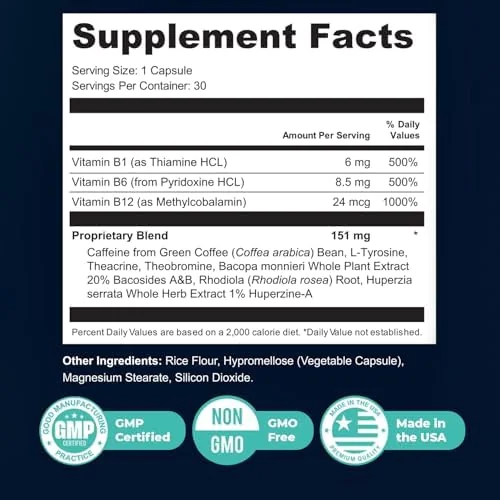
What the Memo Matrix label prints for Rhodiola
The Memo Matrix Supplement Facts panel (label REV. 11/25) lists "Rhodiola Rosea Extract (3% Salidroside) — 100 mg" per two-capsule serving. Two things about that line are worth noticing before anything else. First, it is one of only two ingredients on the entire five-item panel that carries a stated standardization percentage — the other being the L-Theanine line, which doesn't need one since L-theanine is a single defined compound rather than a plant extract. Bacopa Monnieri Extract, by contrast, is printed on this label with no bacoside percentage at all, and Panax Ginseng Extract carries no ginsenoside percentage either. That makes the Rhodiola line the more informative of the two botanical extracts on this panel, purely because of what it discloses.
Second, "3% Salidroside" is a specific, checkable claim, not marketing language. Salidroside is one of the two classes of compounds Rhodiola rosea root is conventionally standardized to, the other being rosavins. A responsible manufacturer states which compound (or compounds) the percentage refers to and what that percentage is, and Memo Matrix's label does both. What it does not do is state the plant part used, the extraction ratio, or whether rosavins are present at any particular level — standardization to salidroside alone, without a paired rosavin figure, is common in the market but is a narrower disclosure than the rosavin-plus-salidroside standardization used in some of the reference material below.
Why a standardization percentage matters more than the milligram figure
A plant extract's milligram weight and its active-compound content are not the same number, and conflating them is the single most common way supplement labels mislead without technically lying. "100 mg of Rhodiola rosea extract" could mean anything from a trace amount of salidroside to a meaningfully concentrated dose, depending entirely on the extraction ratio and the standardization percentage — two things a bare milligram figure does not tell you. A label that states "3% Salidroside" is doing the buyer a real favor: it lets you calculate that 100 mg of a 3%-salidroside extract supplies about 3 mg of salidroside itself, which is a number you can actually compare against something.
This is why, when evaluating any botanical extract on a supplement label, the standardization percentage should be read before the milligram total, not after. Two products can both print "100 mg Rhodiola rosea extract" and differ several-fold in the compound the research was actually testing, exactly the same way two Bacopa products can differ five-fold in bacoside content behind an identical headline weight — a pattern we cover in more depth in our review of the Bacopa and Huperzine-A evidence. The Memo Matrix label at least gives you the percentage to do that math for Rhodiola; for Bacopa on the same label, that number simply isn't printed, so the same calculation can't be done.
What "3% Salidroside, 100 mg" actually supplies
| Label figure | Salidroside content (calculated) | What this tells you |
|---|---|---|
| 100 mg extract, 3% salidroside | ≈3 mg salidroside | A checkable number, because the standardization is disclosed |
| 100 mg extract, standardization not stated | Unknown | Cannot be compared to any published dose (this is Bacopa's situation on this same label) |
| "Proprietary blend" containing Rhodiola | Unknowable | Cannot be isolated from the other ingredients in the blend |
Salidroside is one marker compound among several bioactive constituents in Rhodiola rosea root; a percentage tied to it is informative but is not a complete picture of everything the extract contains.
What clinical Rhodiola trials for fatigue and stress typically used
Rhodiola rosea has a reasonably substantial human trial record for fatigue and stress-related outcomes, more so than several other botanicals common in nootropic blends. A 2011 systematic review of randomized controlled trials in Phytomedicine by Hung and colleagues, and a separate 2012 systematic review in BMC Complementary and Alternative Medicine by Ishaque and colleagues specifically focused on physical and mental fatigue, both concluded that Rhodiola rosea extracts showed some evidence of benefit for fatigue-related outcomes, while flagging that the overall body of trials was heterogeneous in dosing, extract standardization and study quality — meaning the "yes, it works" conclusion comes with real caveats about how consistently it was tested.
Across the trials both reviews examined, total daily doses of Rhodiola extract commonly ranged from roughly 200 mg to 600 mg per day, frequently using extracts standardized to combinations of rosavins and salidroside (a commonly cited reference standardization in the clinical literature is approximately 3% rosavins and 1% salidroside, from an extract known in some studies by the trade name SHR-5, though not every trial used that exact preparation). Comparing that range to Memo Matrix's 100 mg per serving, the Memo Matrix dose sits at or below the lower end of what the reviewed clinical trials used, and it is standardized to salidroside alone rather than the paired rosavin-and-salidroside standardization some of the positive trials employed. That does not mean 100 mg of a 3%-salidroside extract does nothing — but it does mean the dose here is more conservative than what much of the positive clinical literature tested, and the standardization profile is not a direct match either.
Reading a Rhodiola label like a researcher would
Three questions are worth asking of any Rhodiola ingredient line, in order of importance. First: is a standardization percentage printed at all, and to which compound? Memo Matrix answers this — 3% salidroside — which already puts it ahead of many labels that print only a milligram figure. Second: does the percentage match, or come reasonably close to, what the clinical trials for the outcome being claimed actually used? Here the honest answer is "partially" — salidroside standardization is real and disclosed, but the specific 3%-salidroside-only profile at 100 mg is a lighter, narrower version of what several of the reviewed fatigue trials tested. Third: is the extraction ratio or plant part disclosed? Memo Matrix's label does not state this, so it is one more gap on top of the dose-versus-trial comparison.
None of this is a criticism unique to Memo Matrix; extract standardization disclosure is inconsistent across the entire supplement category, and printing any percentage at all — as this label does for Rhodiola — is more transparency than a large share of competing products offer. The point of walking through the math is that a milligram number in isolation tells a buyer almost nothing, while a milligram number paired with a standardization percentage at least lets you do the comparison honestly. Our broader nootropic supplement buyer's guide works through this same standardization-first approach across other common nootropic botanicals.
What the evidence does and doesn't support
What it supports. Rhodiola rosea has a real, if moderate, evidence base for reducing subjective fatigue and improving some markers of stress-related mental performance across multiple randomized trials, pooled in more than one independent systematic review. The mechanism proposed for these effects relates to Rhodiola's traditional classification as an "adaptogen," though the pharmacological detail of how salidroside and rosavins produce these outcomes is still an active area of research rather than settled science.
What it does not support. The trial evidence does not establish Rhodiola as a treatment for any diagnosed condition, does not show effects at doses far below the studied range, and — specific to this product — the reviewed literature does not include a trial of Memo Matrix itself, only of Rhodiola rosea extracts generally, several of which used a higher dose or a different standardization profile than the 100 mg, 3%-salidroside-only line on this label. As with every ingredient on this panel, evidence for the botanical is not the same as evidence for this specific capsule.
What isn't on the label. Beyond the standardization gap already discussed, the Memo Matrix panel does not name a plant part, an extraction ratio or solvent for the Rhodiola line, and it does not identify a manufacturer, a third-party testing lab or a certificate of analysis anywhere on the bottle. That means none of those sourcing details can be checked independently of what is printed, and a buyer comparing this line to the clinical trial record is working with the standardization percentage and the milligram figure alone — genuinely more than many competing labels disclose, but still short of what a full apples-to-apples comparison would need.
Medical note: this article is general information, not medical advice. Rhodiola rosea is generally well tolerated at studied doses but can interact with certain medications, including some antidepressants, and should be discussed with a healthcare professional before use, especially if you are pregnant, nursing or managing a health condition.
Scientific references
- Hung S.K., Perry R., Ernst E. — The effectiveness and efficacy of Rhodiola rosea L.: a systematic review of randomized clinical trials, Phytomedicine (2011)
- Ishaque S., Shamseer L., Bukutu C., Vohra S. — Rhodiola rosea for physical and mental fatigue: a systematic review, BMC Complementary and Alternative Medicine (2012)
- Memo Matrix Ingredients — the full Supplement Facts panel, line by line
- Bacopa & Huperzine-A: the same standardization problem, explained
Frequently asked questions
What does "3% Salidroside" mean on the Memo Matrix label?
It means the Rhodiola Rosea Extract used is standardized so that salidroside — one of Rhodiola's marker bioactive compounds — makes up 3% of the extract's weight. At the label's 100 mg extract amount, that works out to roughly 3 mg of salidroside per serving.
Why does standardization matter more than the milligram number?
Because the milligram figure describes the total extract weight, not how concentrated it is in the compound believed responsible for any effect. A 100 mg extract standardized to 3% salidroside and a 100 mg extract with no stated standardization can differ enormously in actual active content, even though both print the identical "100 mg" on the label.
How does 100 mg of 3%-salidroside Rhodiola compare to what clinical trials used?
Systematic reviews of randomized Rhodiola trials for fatigue commonly cite total daily doses in the 200–600 mg range, frequently using extracts standardized to both rosavins and salidroside together. Memo Matrix's 100 mg, salidroside-only line sits below that range and uses a narrower standardization profile, so it is a lighter version of what much of the positive clinical literature tested.
Is Rhodiola Rosea's standardization the only thing worth checking on this label?
It's one of two label ingredients (with L-Theanine, which doesn't need a percentage) that discloses a standardization at all. Bacopa Monnieri's bacoside percentage and Panax Ginseng's ginsenoside percentage are both left unprinted on the same panel, which is worth knowing if you're trying to judge those two ingredients against their own clinical literature.
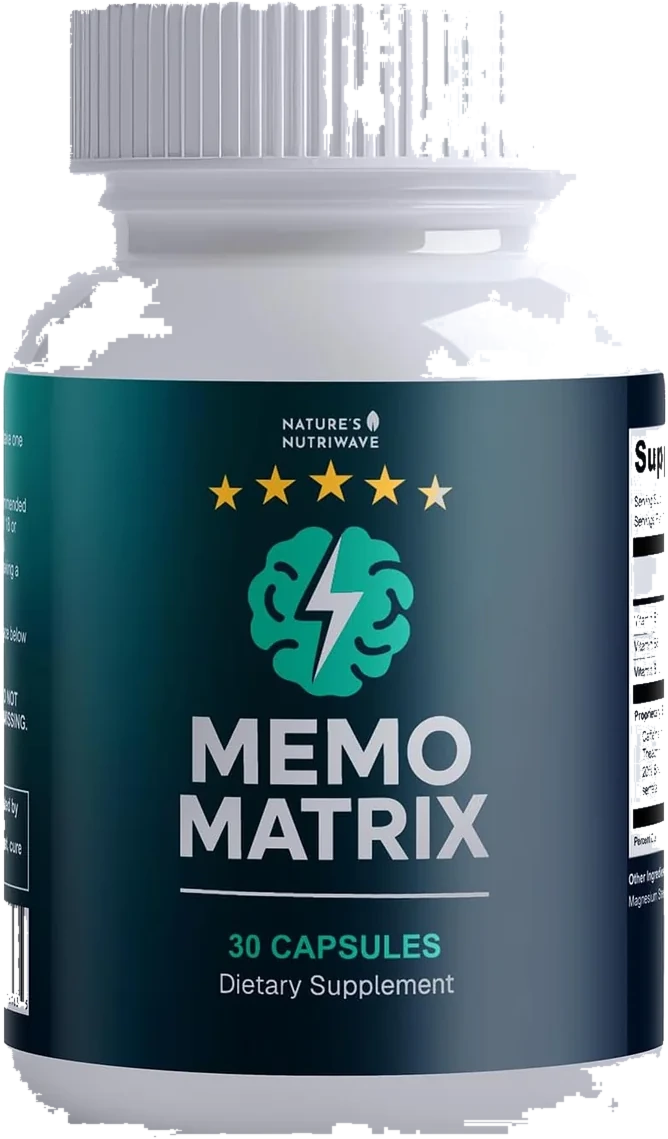
See every ingredient on the Memo Matrix label
Rhodiola Rosea Extract (3% Salidroside, 100 mg) is one of five individually-listed ingredients on the panel, alongside BCAA 2:1:1, Bacopa Monnieri, L-Theanine and Panax Ginseng.
Order Memo Matrix