Bacopa monnieri and Huperzine-A for Memory: What the Research Actually Shows
Quick Answer: Do Bacopa and Huperzine-A Improve Memory?
To a modest, real extent for the right person, and slowly. Meta-analyses of randomised trials suggest Bacopa monnieri can improve aspects of memory and information retention, provided you take an adequately standardised dose for 8 to 12 weeks. Huperzine-A is a genuine acetylcholinesterase inhibitor with plausible memory chemistry and some clinical data, though the evidence in healthy adults is thinner and it is potent enough to warrant caution. Neither is a treatment for memory loss or dementia, and neither works overnight.
- Strongest finding: Bacopa modestly improves memory with consistent long-term use.
- Dose that matters: around 300 mg/day of a bacoside-standardised extract in many studies.
- Key caveat: support for healthy cognition, not a cure — and Huperzine-A deserves respect.
Why Bacopa, and why the timeline matters so much
Bacopa monnieri has been used in Ayurvedic tradition for memory for centuries, and unlike a lot of folk nootropics it has been put through modern randomised, placebo-controlled trials. The active compounds are the bacosides, and in a meta-analysis of randomised controlled trials published in the Journal of Ethnopharmacology (2014) the effect that showed up most consistently was on the acquisition and retention of new information — roughly, learning things and keeping them.
The single most important thing to understand about Bacopa is that it is slow. The trials that found an effect ran for 8 to 12 weeks, and shorter studies tend to find nothing. This is not a compound you feel on day one, which means judging it after a week tells you nothing. It also means the standardisation and the dose matter: much of the positive data uses around 300 mg per day of an extract standardised to a meaningful bacoside percentage.
The Huperzine-A side of the story
Huperzine-A is a different kind of ingredient entirely. It is a purified compound from the moss Huperzia serrata, and it works as an acetylcholinesterase inhibitor — it slows the enzyme that breaks down acetylcholine, the neurotransmitter most associated with learning and memory. That is the same broad mechanism as some prescription drugs used in cognitive decline, which tells you two things: the rationale is real, and the compound is potent.
Because it is pharmacologically active, Huperzine-A is the ingredient to treat with the most respect. Many practitioners recommend cycling it rather than taking it continuously, it can cause cholinergic side effects at higher doses, and it can interact with certain medications. The clinical evidence is strongest in studies of cognitive decline — a systematic review and meta-analysis of randomised trials in PLoS One (2013) pooled that literature — while the data for boosting memory in healthy, younger adults is much thinner.
What the evidence supports, in one table
| Ingredient | What the research supports |
|---|---|
| Bacopa monnieri | Modestly improves memory with 8–12 weeks of daily use (meta-analyses) |
| Huperzine-A | Plausible acetylcholine mechanism; clinical data mainly in cognitive decline |
| Caffeine | Robust short-term alertness and attention |
| L-Tyrosine | Protects performance under stress and sleep loss (Jongkees, J Psychiatr Res, 2015) |
| Theacrine / Rhodiola | Limited or mixed human evidence at typical blend doses |
How to read a bacopa label without being misled
The single number that decides whether a bacopa ingredient can plausibly do anything is the bacoside standardisation, and it is the number most labels are vaguest about. Bacosides are the saponin compounds tied to the memory effect, and an extract is standardised to a stated percentage of them — commonly anywhere from 10% to 55%. The trials that reported a benefit generally used around 300 mg per day of an extract standardised toward the higher end of that range, which means 300 mg of a 10% extract and 300 mg of a 50% extract are not remotely the same product, even though both can print "300 mg Bacopa monnieri" in the same font.
Three things are therefore worth checking, in this order. First, is a bacoside percentage printed at all? If it is not, you are buying an unknown quantity of the active. Second, is the plant part named? Whole-plant extract is what most of the research used; leaf-only or root material is a different starting material. Third, is the amount disclosed as its own line, or is it buried inside a proprietary blend that gives one total weight for several ingredients? A blend total tells you nothing about the split, and the cheapest ingredient in a blend usually occupies most of the weight. Our nootropic supplement buyer's guide works through the rest of that checklist, including third-party testing and manufacturing disclosure.
Bacoside standardisation, translated into milligrams
| Label says | Bacosides actually supplied | How it compares to the trial range |
|---|---|---|
| 300 mg extract, 55% bacosides | about 165 mg | At or above what most positive trials delivered |
| 300 mg extract, 20% bacosides | about 60 mg | Well below the studied range |
| 300 mg extract, 10% bacosides | about 30 mg | A token amount by comparison |
| "Proprietary blend, 151 mg" including bacopa | unknowable | Cannot be compared to any trial at all |
The arithmetic is simple and the point is uncomfortable: two products can carry the same headline milligram figure and differ five-fold in the compound the research was actually about. This is also why a proprietary blend is not a neutral formatting choice.
What the evidence shows, and what it does not
What it shows. Pooled across randomised, placebo-controlled trials, bacopa monnieri produces a small-to-moderate improvement in the acquisition and retention of new information in healthy adults, most visibly on delayed word-recall tasks. The effect has held up across more than one independent pooling of the literature, which is more than can be said for most botanicals sold for memory. Reaction-time measures improve less consistently, and the trials that ran long enough to see anything all ran for months rather than weeks.
What it does not show. It does not show that bacopa raises intelligence, restores lost memory, prevents dementia, or produces anything a person would describe as a noticeable jolt. It does not show a benefit at doses far below the studied range, because those doses have largely not been tested. And it does not transfer to a finished multi-ingredient product: evidence for an ingredient is not evidence for a capsule that contains an undisclosed fraction of it. That distinction is the whole reason so many buyers conclude that memory pills do not work — the ingredient had evidence, the product they bought did not match it.
Four mistakes that waste a bacopa purchase
Judging it in week one. This is the most common and the most expensive. Nothing in the bacopa literature predicts a day-one effect, so an early verdict is measuring expectation, not the compound. If you are going to try it, commit to the eight-to-twelve-week window the trials used or do not start.
Changing three things at once. Starting bacopa in the same week you change your sleep schedule, your coffee intake and your workload guarantees you will not know what did what. Keep everything else as stable as you reasonably can for the trial period.
Taking it on an empty stomach. Digestive upset is the most frequently reported complaint with bacopa, and it is substantially reduced by taking the dose with food. Bacosides are fat-soluble, so a meal containing some fat is the sensible pairing.
Assuming more huperzine is better. Huperzine-A is dosed in micrograms, not milligrams, for a reason. Doubling up on an acetylcholinesterase inhibitor is not a way to get twice the memory support; it is a way to get cholinergic side effects. If you are choosing between formulas on ingredient depth, our comparison of what actually separates the better memory supplements is a more useful lens than ingredient count.
How the two ingredients fit into a daily routine
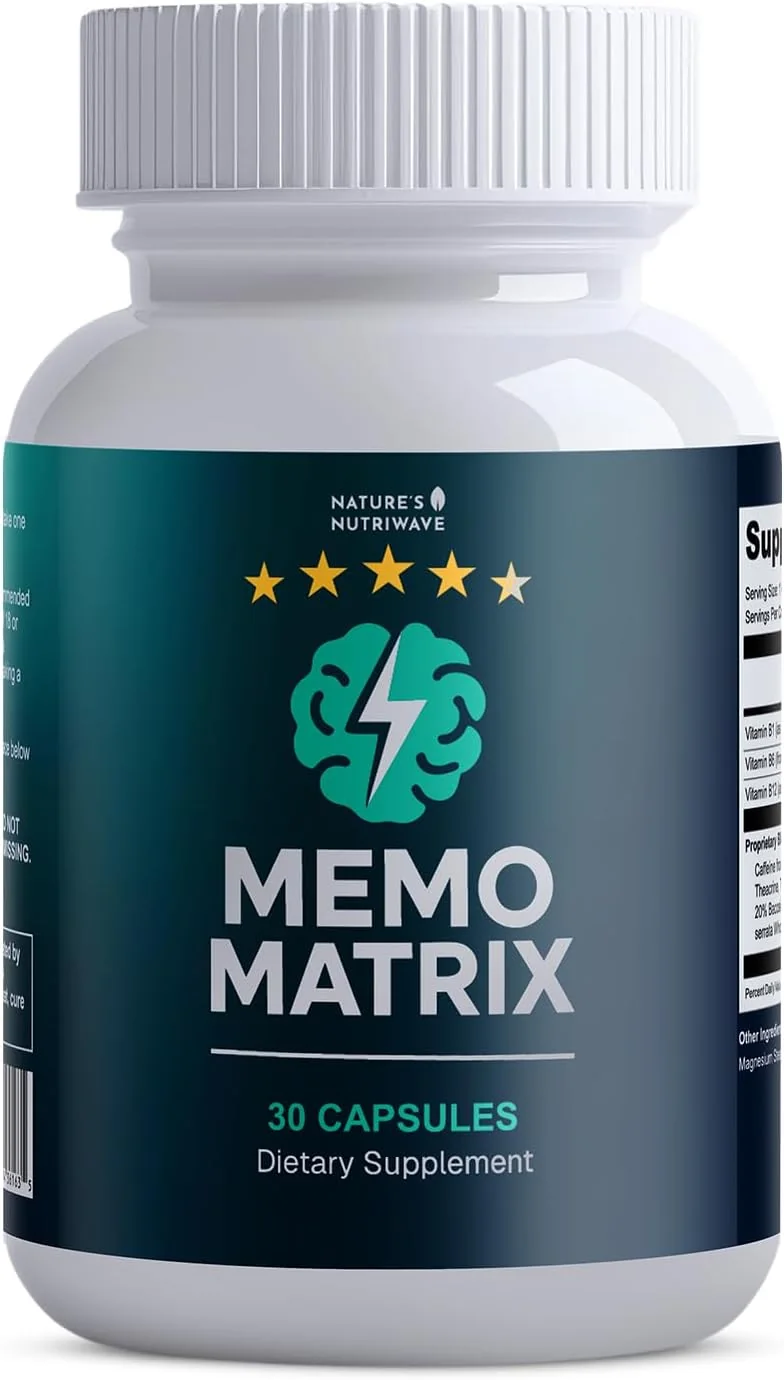
Because bacopa and huperzine-A work on different clocks from stimulants, the practical question is less "which one" than "what else is in the capsule". A formula that pairs slow-building memory botanicals with a same-day energy component is trying to cover two jobs at once, and that is a reasonable design as long as each part is disclosed. It also means the honest way to evaluate such a product is in two passes: judge the stimulant half on the afternoon you take it, and judge the memory half only after two to three months. If you want to see how that plays out on one specific label, we break down every ingredient on the Memo Matrix Supplement Facts panel, including the parts the panel does not disclose.
Timing is straightforward. Take it in the morning if the formula contains caffeine, with food, and at the same time each day — consistency matters more here than clock precision, because the bacopa effect is cumulative rather than acute. If a formula is caffeine-free, evening dosing is fine and some people prefer it, since bacopa is mildly calming for a minority of users.
Where the evidence stops
Two honest limitations are worth stating plainly. First, a finished multi-ingredient supplement is not the same as any single studied dose — the ingredients can have evidence while the specific product, especially one that hides much of its content inside a proprietary blend, has never been trialled. Always check a label's bacoside standardisation and Huperzine-A microgram figures against what the studies actually used. Second, none of this treats a disease. If you or someone you care for is experiencing genuine memory loss, confusion or decline, that is a medical situation, and a nootropic is not the answer — a clinician is.
Medical note: this article is general information, not medical advice. Speak to a healthcare professional before starting any supplement, especially if you are pregnant, nursing, caffeine-sensitive, or taking medication — Huperzine-A in particular is pharmacologically active and can interact with several drugs.
Scientific references
- Kongkeaw C. et al. — Meta-analysis of randomized controlled trials on cognitive effects of Bacopa monnieri extract, Journal of Ethnopharmacology (2014)
- NIH NCCIH — Cognitive function, dementia and dietary supplements
- Cochrane Database of Systematic Reviews — Huperzine A for Alzheimer's disease and cognitive function
- Yang G. et al. — Huperzine A for Alzheimer's disease: a systematic review and meta-analysis of randomized clinical trials, PLoS One (2013)
- Pase M.P. et al. — The cognitive-enhancing effects of Bacopa monnieri: a systematic review of randomized, controlled human clinical trials, Journal of Alternative and Complementary Medicine (2012)
- Hung S.K. et al. — The effectiveness and efficacy of Rhodiola rosea L.: a systematic review of randomized clinical trials, Phytomedicine (2011)
- Jongkees B.J. et al. — Effect of tyrosine supplementation on clinical and healthy populations under stress or cognitive demands: a review, Journal of Psychiatric Research (2015)
- European Food Safety Authority — Caffeine: safety and cognitive effects
Frequently asked questions
Does Bacopa monnieri improve memory?
For some people, modestly, and slowly. Meta-analyses of randomised controlled trials suggest Bacopa monnieri can improve aspects of memory and information retention, but the effect is moderate and appears only after roughly 8 to 12 weeks of consistent daily use. It is support for healthy memory, not a treatment for a cognitive disorder.
How much Bacopa monnieri is needed?
Trials commonly use around 300 mg per day of an extract standardised to about 50% bacosides, though products vary and many report a lower bacoside percentage. Because bacosides are the compounds tied to the effect, the standardisation is the number worth checking on any label.
What does Huperzine-A do?
Huperzine-A is an acetylcholinesterase inhibitor: it slows the breakdown of acetylcholine, a neurotransmitter central to learning and memory. It has genuine pharmacological activity, which is why many practitioners suggest cycling it and why it can interact with some medications.
Can a nootropic supplement treat memory loss or dementia?
No. Memory loss and dementia are medical conditions that need proper assessment, and a dietary supplement is not a substitute. Bacopa and Huperzine-A are studied for supporting healthy cognition, not for treating a disease. If you are worried about memory, see a clinician.
See how Memo Matrix puts this together
Bacopa, Huperzine-A, L-tyrosine and a green-coffee energy blend in one daily capsule — with every ingredient and its evidence laid out.
Read the Memo Matrix Review