Nootropic Supplement Buyer's Guide (2026): Fast-Acting vs Slow-Building
Quick Answer: How Do I Choose a Nootropic Supplement?
A good nootropic supplement layers a fast-acting focus pair over slow-building actives so it works today and over the coming weeks. The strongest same-day combination is L-theanine with caffeine; bacopa monnieri builds memory across eight to twelve weeks. Insist on disclosed doses, GMP-certified, FDA-registered manufacturing and third-party testing.
- Layer two timescales: a fast focus pair for today, a slow compound for the coming weeks.
- Read the doses: every active listed in milligrams, never hidden in a proprietary blend.
- Verify quality: GMP-certified, FDA-registered manufacturing plus third-party testing.
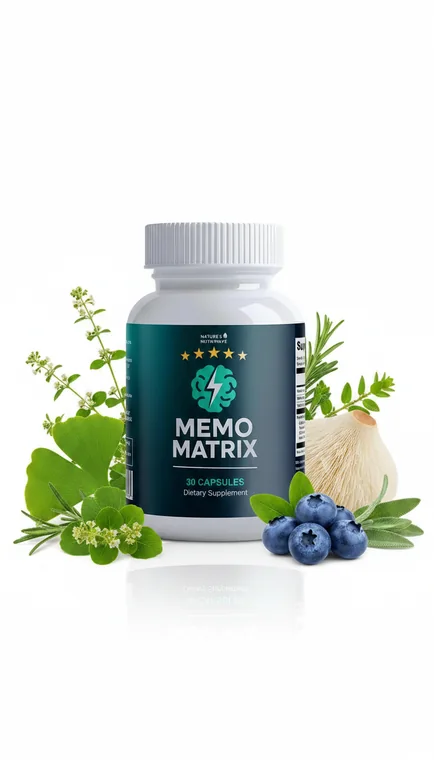
Buying a nootropic supplement should not require a biochemistry degree, yet most product pages seem determined to make it feel that way. This plain-English buyer's guide strips the decision back to what actually matters: whether an ingredient works today or over weeks, whether the label is honest about doses, and whether an independent lab has confirmed the contents. Get those three things right and the rest is noise. Get them wrong and you can spend real money on a bottle that was never going to do much, however impressive the marketing around it looked.
The Core Idea: Two Speeds Of Nootropic
Almost every credible nootropic ingredient falls into one of two categories, and understanding the split is the single most useful thing a buyer can learn. Fast-acting nootropics change how you feel the same day. You take them in the morning and notice sharper attention within the hour. Slow-building nootropics do nothing dramatic on day one; they work through gradual changes and reveal themselves over weeks of consistent use.
Neither speed is better than the other, because they solve different problems. Fast-acting actives handle the meeting this afternoon and the deadline tonight. Slow-building actives handle the recall and learning you want to be stronger next month. The mistake buyers make is expecting one ingredient to do both, then feeling cheated when it does not. The smarter approach, and the one this guide is built around, is to layer them.
Fast-Acting: L-Theanine And Caffeine, The Reliable Pair
If you want an effect you can feel today, the best-supported option is not exotic. It is L-theanine combined with caffeine. Caffeine alone lifts alertness but brings the familiar downsides: jitteriness, a racing edge, and a later crash. L-theanine, an amino acid found in tea, smooths those edges. Studied together, the pair has repeatedly produced sharper, calmer focus than either compound on its own, which is why it is the strongest same-day combination in the whole category. Our closer look at how L-theanine and caffeine work together for focus covers the research and the ratios in detail.
The practical implication for a buyer is timing and dose. Because caffeine has a long half-life, a fast-acting nootropic is best taken earlier in the day, and you should count every other coffee and energy drink toward your total so you do not overshoot. This is also why the exact caffeine amount on the label matters: a formula that hides it is one you cannot dose responsibly. The evidence for pairing it with L-theanine is summarised in a systematic review and meta-analysis in Nutrition Reviews (2014), which found the combination acts within the hour rather than over weeks.
Slow-Building: Bacopa And The Patience Dividend
On the other timescale sits bacopa monnieri, the best example of a slow-building nootropic. Randomised controlled trials have shown bacopa improving recall and the rate of learning, but the effect accumulates over roughly eight to twelve weeks of daily use rather than appearing on day one. Judge it in the first week and you will conclude, wrongly, that it does nothing. Give it a full course and you are testing what the studies actually measured.
Other slow-building actives fit here too. Rhodiola rosea builds resistance to mental fatigue, huperzine A supports the acetylcholine involved in learning, and compounds such as magnesium L-threonate and its brain benefits are studied for their gradual effects rather than a same-day kick. The common thread is patience: these ingredients reward consistency, which is why buying a single bottle and quitting in ten days is the most common way people waste money in this category.
Why Layering Beats Buying Singles
Once you see the two speeds, the winning strategy is obvious: layer a fast-acting pair with one or more slow-building compounds in a single daily formula. That way one dose gives you a noticeable lift today, keeping you consistent enough to stick with the routine, while the slow actives quietly accumulate the memory and stress-resilience benefits underneath. The same-day effect is what keeps you taking the capsule long enough for the slow-build effect to arrive.
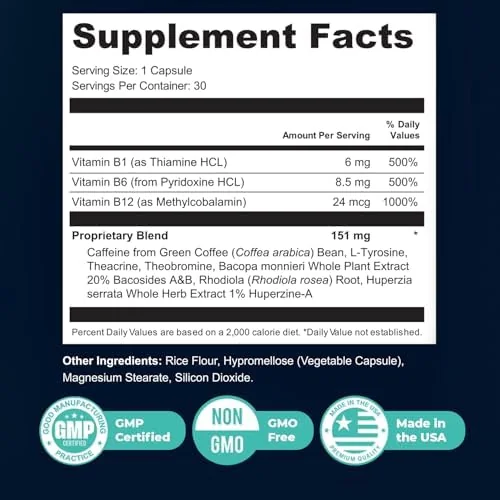
You could assemble this yourself by buying L-theanine, caffeine, bacopa and rhodiola separately, but that means four purchases, four timing decisions, and four chances to underdose or forget. A well-built all-in-one does the layering for you. This is exactly how Memo Matrix is designed: a green-coffee caffeine, theacrine and theobromine energy blend for same-day focus sitting over bacopa, rhodiola, L-tyrosine and huperzine A for the longer game.
A Layered Stack In One Daily Dose
Memo Matrix pairs a same-day green-coffee energy blend with slow-building bacopa, rhodiola, L-tyrosine and huperzine A, every amount printed so you can see exactly what you are taking on both timescales.
See How Memo Matrix Layers ItLabel Red Flags Every Buyer Should Recognise
Most bad nootropic purchases could be avoided by reading the back of the bottle for thirty seconds. These are the warning signs worth memorising.
Proprietary blends. A single combined weight covering several ingredients hides how much of each you are getting. It lets a brand feature an impressive active in the blend's name while including only a trace. If the individual doses are not printed, you cannot verify the formula, and unverifiable should read as underdosed.
Undisclosed caffeine. A stimulant you cannot quantify is one you cannot dose safely around your other coffee. The exact milligram figure should be on the label.
Fairy-dusting. A famous ingredient listed at a fraction of its studied dose is there to decorate the label, not to work. Compare each amount with what trials actually used.
Disease claims. Any product promising to treat, cure, prevent or reverse a condition is making a claim supplements are not permitted to make, and it is a signal to walk away rather than a selling point.
| Feature | Fast-acting nootropics | Slow-building nootropics |
|---|---|---|
| Best example | L-theanine + caffeine | Bacopa monnieri |
| When you notice it | Same day, within an hour | Over 8–12 weeks |
| What it helps | Attention, alertness, calm focus | Recall, learning, stress resilience |
| Main caution | Caffeine timing and total intake | Requires daily consistency |
| Buyer's role | Take earlier in the day | Commit to a full multi-week course |
A nootropic label should read like a receipt, not a riddle. If you cannot see the dose, you are being asked to trust rather than to verify.
How To Verify Third-Party Testing Before You Pay
Because supplements face lighter regulation than medicines, the gap between what a label claims and what a capsule contains can be real. Independent testing has found products underdosed, contaminated with heavy metals, or missing the headline ingredient entirely. Third-party testing is the safeguard: an independent lab, with no stake in the sale, checks each batch for purity and confirms the contents match the label.
Before you pay, look for a brand that states plainly that its products are third-party tested, ideally naming the standard or the type of testing, with checks for heavy metals, microbes and actual ingredient content. Pair that with GMP-certified, FDA-registered manufacturing, which governs how consistently the product is made in the first place. A brand that publishes these details is inviting scrutiny; a brand that says nothing about where or how it manufactures is telling you to look elsewhere. When testing information is not on the site, it is fair to email and ask, and a slow or evasive answer is itself informative.
Objections And Myths, Answered Honestly
"Nootropics are like limitless pills." They are not, and any page implying otherwise is overselling. Real nootropic effects are modest and specific: a smoother focus today from L-theanine and caffeine, better recall over a couple of months from bacopa. They are a useful edge on top of sleep, exercise and nutrition, not a substitute for them.
"Natural means no side effects." Natural does not mean inert. Caffeine can cause jitteriness, a raised heart rate and disrupted sleep, some people get mild digestive upset starting bacopa, and huperzine A is potent enough to use conservatively. Side effects are exactly why disclosed dosing matters, so you can start low and know what you are taking.
"More ingredients means a better formula." Usually the reverse. Cramming twenty names into one capsule tends to mean tiny amounts of each — the arithmetic we run over one real label in our breakdown of what is actually inside a 151 mg proprietary blend. A focused stack of studied actives at real doses beats a kitchen-sink blend almost every time, and the same arithmetic decides the Neuriva versus broader-stack comparison on cost per effective dose.
Health note: this article is general information, not medical advice. Nootropic supplements do not treat, cure or prevent any disease. Speak to a doctor or pharmacist before starting one, especially if you are pregnant or nursing, sensitive to caffeine, taking medication such as blood thinners, blood-pressure or heart-rhythm drugs, or managing a health condition, and never combine multiple caffeine sources without accounting for the total.
Your Five-Point Buying Checklist
Bring it all together into a routine you can run on any bottle. First, does the formula layer a fast-acting pair with slow-building actives, so it works on both timescales? Second, are all doses disclosed in milligrams rather than hidden in a proprietary blend? Third, are the studied ingredients present at amounts close to the research, not fairy-dusted? Fourth, is there clear third-party testing plus GMP-certified, FDA-registered manufacturing? Fifth, does the marketing set honest expectations instead of promising the impossible? Five yeses is a genuine contender; a single no, however slick the page, is a reason to keep looking.
Memo Matrix is built to pass that checklist as a layered stack pairing same-day focus with long-term memory support, and if you want to see the wider field it sits in, our best brain supplements 2026 buyer's guide ranks the category by evidence tier. When you are ready to judge one formula against this whole checklist, our full Memo Matrix review on whether it actually works is the place to do it.
Related reading
Frequently asked questions
What should I look for when buying a nootropic supplement?
When buying a nootropic supplement, look for disclosed doses of each ingredient, a formula that layers a fast-acting focus pair over slow-building memory actives, GMP-certified and FDA-registered manufacturing, and third-party testing. The best value comes from a short list of studied ingredients such as L-theanine with caffeine for same-day focus and bacopa monnieri for memory, each present at an amount close to what the research used, rather than a long list hidden inside a proprietary blend.
What is the difference between fast-acting and slow-building nootropics?
Fast-acting nootropics change how you feel the same day, with L-theanine combined with caffeine being the strongest example for smooth, focused alertness. Slow-building nootropics work through gradual changes and are judged over weeks, with bacopa monnieri improving memory across roughly eight to twelve weeks of daily use. The most effective strategy layers the two, so a single daily dose gives you a noticeable lift today while the memory support accumulates in the background.
How do I know if a nootropic supplement is third-party tested?
A third-party tested nootropic supplement will say so plainly and often name the standard or lab involved, indicating an independent facility checked each batch for purity and confirmed the contents match the label. Look for statements about testing for heavy metals, microbes and actual ingredient content, alongside GMP-certified and FDA-registered manufacturing. If a brand shares no testing or manufacturing detail at all, treat that silence as a reason for caution rather than an oversight.
Do nootropic supplements have side effects?
Nootropic supplements can have side effects, which is why dosing and disclosure matter. Caffeine-containing formulas may cause jitteriness, raised heart rate or disrupted sleep, especially later in the day, and some people experience mild digestive upset when starting bacopa. Effects vary by individual and by dose, so start conservatively, avoid stacking multiple caffeine sources, and speak to a doctor or pharmacist first if you take medication, are pregnant or nursing, or have a health condition.
Scientific references
- Camfield D.A. et al. — Acute effects of tea constituents L-theanine, caffeine and epigallocatechin gallate on cognitive function and mood: a systematic review and meta-analysis, Nutrition Reviews (2014)
- Kongkeaw C. et al. — Meta-analysis of randomized controlled trials on cognitive effects of Bacopa monnieri extract, Journal of Ethnopharmacology (2014)
- Yang G. et al. — Huperzine A for Alzheimer's disease: a systematic review and meta-analysis of randomized clinical trials, PLoS One (2013)
- NCCIH (NIH) — rhodiola rosea overview
- U.S. FDA — dietary supplements overview
- U.S. FDA — current good manufacturing practices for supplements
- NIH Office of Dietary Supplements — fact sheets
Focus Today, Memory Support Over The Weeks
Bacopa, rhodiola, L-tyrosine and huperzine A with a green-coffee caffeine, theacrine and theobromine energy blend, published openly so you can dose both timescales with confidence.
View Memo Matrix Options