Best Brain Supplements 2026: A Buyer's Guide Ranked by Evidence
Quick Answer: What Are the Best Brain Supplements in 2026?
The best brain supplements in 2026 are multi-ingredient formulas built on clinically studied nootropics rather than a single hyped extract. Look for citicoline, bacopa monnieri, lion's mane, rhodiola and L-theanine at disclosed doses, made in a GMP-certified, FDA-registered facility with third-party purity testing. Evidence tier matters far more than marketing.
- Rank by evidence, not hype: favour the handful of actives with real human trials.
- Combinations usually win: cognition spans focus, stress and memory, so a stack fits better than one pill.
- Demand transparency: full doses on the label plus GMP manufacturing and third-party testing.
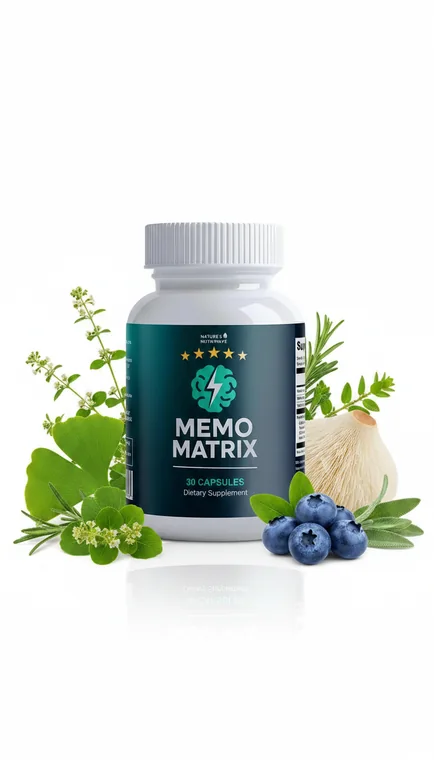
Search for the best brain supplements and 2026 hands you a wall of near-identical bottles, each promising sharper focus, faster recall and effortless clarity. The category has money behind that noise: US spending on brain-health supplements is projected to reach roughly $11.6 billion by 2026. When a market grows that fast, marketing budgets grow faster than the science, and the shopper is left trying to separate a genuinely useful formula from an expensively packaged one. This guide fixes that by ranking what to look for by evidence tier rather than by advertising volume, and by explaining why a thoughtfully built stack tends to outperform a single fashionable extract.
Start With Evidence Tier, Not the Ingredient Of The Month
The single most useful habit when comparing the best brain supplements is to sort ingredients into tiers by the quality of the human evidence behind them. Tier one holds the actives that have been tested in randomised controlled trials in people, with results that have held up across more than one study. Tier two holds ingredients with promising but limited or preliminary human data, often small trials or research in specific populations. Tier three is everything supported mainly by test-tube studies, animal models or mechanism-based reasoning, which is interesting but not proof of benefit in a healthy adult.
Most of the compounds that dominate supplement advertising sit in tiers two and three, dressed up in the language of tier one. Once you start reading labels this way, the field narrows quickly. A formula loaded with a dozen tier-three botanicals is less compelling than a leaner one built around a few tier-one and tier-two actives at honest doses. The point of a buyer's guide is not to memorise every molecule; it is to weight your money toward the ingredients that have earned it — and on that test bacopa monnieri sits at the top, on the strength of a 2014 meta-analysis of randomised controlled trials in the Journal of Ethnopharmacology that found a reliable but modest effect on memory acquisition.
The Ingredients With Real Clinical Evidence
A short list of nootropics carries most of the credible human research, and any 2026 brain supplement worth buying should be built around them.
Bacopa monnieri is the standout for memory. Randomised controlled trials, typically run over eight to twelve weeks, have shown gains in recall and the rate of learning new information. Crucially, bacopa is a slow builder rather than a same-day pill, which sets an honest expectation for how any formula containing it will feel in week one. We cover the trial detail in our deep dive on the memory evidence behind bacopa monnieri and huperzine A.
Citicoline supports the brain's supply of the raw materials used to build cell membranes and the neurotransmitter acetylcholine. Human studies, including work on branded forms, have reported improvements in attention and processing speed, which places it firmly in the upper evidence tiers: a randomised, double-blind trial in The Journal of Nutrition (2021) found citicoline improved memory performance in healthy older adults over twelve weeks.
Lion's mane mushroom has generated genuine interest for its neurotrophic signalling, with early human trials suggesting cognitive benefit. It belongs in tier two: promising, worth including, but not yet backed by the volume of data bacopa enjoys.
Rhodiola rosea is an adaptogen with human research pointing to reduced mental fatigue and steadier performance under stress, which is why it appears in stacks aimed at demanding schedules rather than pure memory work.
L-theanine paired with caffeine is the best-supported same-day combination, repeatedly shown to sharpen attention while smoothing the jittery edge caffeine brings on its own. It is the closest thing the category has to a reliable, felt-today effect.
Why Single Ingredients Underperform Combinations
A recurring mistake is to hunt for one miracle molecule. The problem is that cognition is not one thing. Same-day focus, resistance to mental fatigue, mood, and the slow consolidation of memory run on different systems, and no single compound covers all of them. Buy pure bacopa and you get a memory builder with nothing for today's alertness. Buy caffeine alone and you get a short-lived lift with nothing for eight-week recall.
A well-designed combination addresses several of those systems at once. That is the logical case for a stack: it layers a fast-acting focus pair over slow-building memory and stress actives, so the same daily capsule works on both timescales. This layering strategy is the backbone of our full plain-English nootropic supplement buyer's guide, and it is the reason all-in-one formulas exist. The catch, addressed below, is that a combination only wins if each ingredient is dosed properly.
An All-In-One Built On The Studied Few
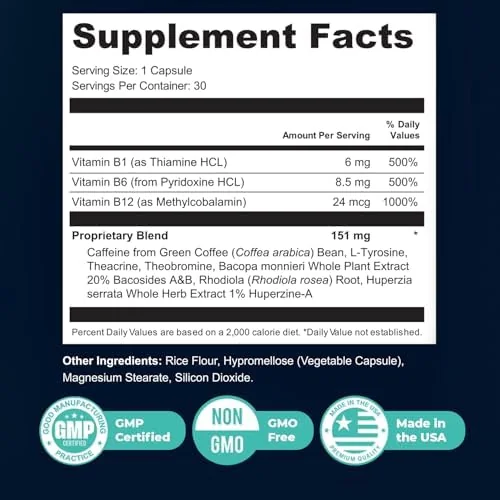
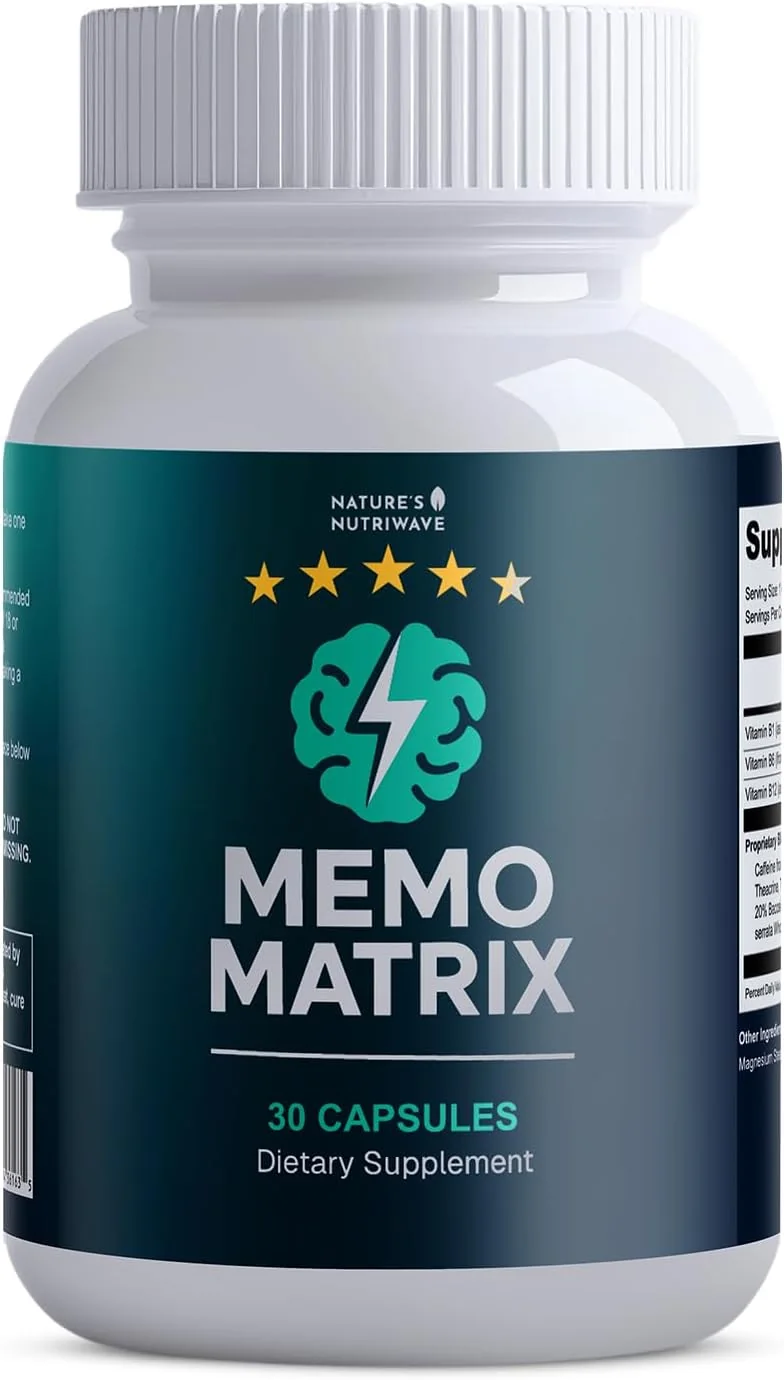
Memo Matrix layers bacopa monnieri, rhodiola, L-tyrosine and huperzine A with a green-coffee energy blend, and publishes every amount so you can rank it against the research yourself.
See the Memo Matrix FormulaHow To Read A Label Like A Buyer, Not A Fan
The best brain supplements in 2026 share one habit: they show their work. When you pick up a bottle, three things on the panel tell you almost everything.
Are the doses disclosed? Every clinically relevant active should list its exact amount in milligrams. A label that hides individual doses inside a single "proprietary blend" figure is asking you to trust that the meaningful ingredients are present at meaningful amounts, which is exactly the claim you cannot verify.
Do the doses match the research? An ingredient printed at a fraction of the amount used in trials is there for the label, not for you. Compare the milligrams on the bottle with the amounts studies actually used; a name on the panel is not the same as an effective serving.
Is the active form named? Standardised extracts and branded, tested forms carry more confidence than a vague botanical name, because they tell you the potency has been controlled rather than left to chance.
| Ingredient | Primary benefit studied | Timescale | Evidence tier |
|---|---|---|---|
| Bacopa monnieri | Recall and rate of learning | Slow build, 8–12 weeks | Tier 1 — repeated RCTs |
| Citicoline | Attention and processing speed | Weeks | Tier 1–2 — human trials |
| L-theanine + caffeine | Same-day focus, smoother alertness | Same day | Tier 1 for the pairing |
| Rhodiola rosea | Mental fatigue under stress | Days to weeks | Tier 2 — mixed but real |
| Lion's mane | General cognition, mood | Weeks | Tier 2 — early human data |
| Huperzine A | Acetylcholine support | Weeks | Tier 2 — use conservatively |
A name on the label is a promise; a dose on the label is evidence. The best brain supplements give you the second, not just the first.
Manufacturing Standards You Should Refuse To Compromise On
Even a perfect ingredient list means little if the product in the bottle is not what the label claims. Supplements are regulated more loosely than medicines, and independent testing has repeatedly found products that were underdosed, contaminated or mislabelled. That makes manufacturing quality a hard requirement, not a nice-to-have.
Insist that any brain supplement is made in a facility that is GMP-certified (Good Manufacturing Practice) and FDA-registered, and look for third-party purity testing that checks each batch for heavy metals, microbes and the actual content of active ingredients. GMP governs how consistently the product is made; third-party testing confirms that what the label promises is what the capsule delivers. A brand willing to publish these details is signalling that it expects to be checked. A brand that stays quiet about where and how it manufactures is telling you something too. That test is also the fastest way to separate a mass-market single-active product from a broader stack, as our comparison of Neuriva against fuller nootropic alternatives shows.
Common Objections And Myths, Answered Honestly
"Do brain supplements even work?" The honest answer is that effects are real but modest, and they are clearest for specific, studied outcomes such as bacopa's recall gains or the focus lift from L-theanine and caffeine. Anyone promising a transformed brain is overselling. A good formula is a small, worthwhile edge stacked on top of sleep, exercise and nutrition, not a replacement for them.
"Aren't they all the same?" No, and the differences are exactly what this guide is about. Two bottles can share an ingredient list on the front and differ enormously in the doses on the back, the forms used and the manufacturing behind them. Same names, different products.
"Natural means safe, so more is better." Natural does not mean risk-free, and more is not better once a dose is adequate. Stimulant content interacts with sleep, blood pressure and heart rhythm; huperzine A is best used conservatively; and several actives have sensible upper limits. Dosing to the research, not to a hunch, is the safer and more effective path.
What A Fair Price Actually Looks Like
Price anxiety is understandable in a category this crowded. A quality brain supplement generally lands in the region of thirty to seventy dollars a month, and multi-bottle bundles usually bring the per-bottle price down. The more useful metric than the sticker, though, is cost per clinically relevant dose. A twenty-dollar bottle that underdoses every active is not cheap; it is money spent on a product that cannot do what it implies. A fairly priced formula that discloses and delivers effective amounts is the better value even when its number is higher, because you are paying for the doses that the trials actually used.
Health note: this article is general information, not medical advice. Talk to a doctor or pharmacist before starting any brain supplement, especially if you are pregnant or nursing, sensitive to caffeine, taking prescription medication such as blood thinners or blood-pressure drugs, or managing a health condition. A supplement is not a treatment for any disease.
Putting It Together: How To Shortlist In 2026
Bring the pieces into a simple sequence. First, screen for a multi-ingredient formula built on tier-one and tier-two actives rather than a single trend. Second, confirm the label discloses each dose and that those doses are in range with the research. Third, require GMP-certified, FDA-registered manufacturing and third-party purity testing. Fourth, judge value on cost per effective dose, not the headline price. A formula that clears all four is a legitimate contender; one that fails any of them, however good the advertising, is not.
Memo Matrix is one example of that layered, all-in-one approach: a same-day green-coffee energy blend sitting over slow-building memory and stress actives, with the amounts published openly. Whether or not it becomes your pick, hold every product you consider to the same four-part standard, and read our companion guide to the best memory supplement for 2026 and how to choose one if recall is your priority. If you want to see how one formula measures up to that bar, read our full Memo Matrix review on whether it actually works before you decide.
Related reading
Frequently asked questions
What is the best brain supplement to buy in 2026?
The best brain supplement to buy in 2026 is a multi-ingredient formula built on clinically studied nootropics, with every dose printed on the label and third-party purity testing behind it. Rather than chasing a single trending extract, look for a stack that pairs a same-day focus component with slow-building memory actives such as bacopa monnieri, then confirm it is made in a GMP-certified, FDA-registered facility. Memo Matrix is one all-in-one example of that layered approach.
Which brain supplement ingredients actually have clinical evidence?
The ingredients with the most human research behind them are citicoline, bacopa monnieri, lion's mane, rhodiola rosea, and the L-theanine plus caffeine pairing. Bacopa has repeatedly shown recall and learning gains in randomised trials run over eight to twelve weeks, while L-theanine with caffeine is the best-supported same-day focus combination. Most other trendy actives have thinner or preliminary evidence, so weight your decision toward the well-studied few.
Are multi-ingredient brain supplements better than single nootropics?
For most people, a well-designed multi-ingredient formula is more practical than buying single nootropics one at a time, because cognition depends on several systems at once and no single compound covers focus, stress and memory together. The important qualifier is dosing: a combination only beats a single ingredient if each active is present at a meaningful amount rather than a sprinkle hidden inside a proprietary blend.
How much should a quality brain supplement cost per month?
A quality brain supplement generally runs somewhere in the region of thirty to seventy dollars per month, with multi-bottle bundles usually lowering the per-bottle price. What matters more than the headline number is cost per clinically relevant dose: a cheap product that underdoses its actives is more expensive in real terms than a fairly priced formula that discloses and delivers effective amounts.
Scientific references
- NIH Office of Dietary Supplements — dietary supplement fact sheets
- Kongkeaw C. et al. — Meta-analysis of randomized controlled trials on cognitive effects of Bacopa monnieri extract, Journal of Ethnopharmacology (2014)
- Nakazaki E. et al. — Citicoline and memory function in healthy older adults: a randomized, double-blind, placebo-controlled clinical trial, The Journal of Nutrition (2021)
- Owen G.N. et al. — The combined effects of L-theanine and caffeine on cognitive performance and mood, Nutritional Neuroscience (2008)
- DeKosky S.T. et al. — Ginkgo biloba for prevention of dementia: a randomized controlled trial, JAMA (2008)
- U.S. FDA — dietary supplements and manufacturing standards
- NCCIH (NIH) — rhodiola rosea overview
Rank It Against The Evidence Yourself
Bacopa, rhodiola, L-tyrosine and huperzine A with a green-coffee caffeine, theacrine and theobromine energy blend, published openly so you can compare every amount with what the studies used.
View Memo Matrix Options