Neuriva vs Nootropic Alternatives Compared
Quick Answer: How Does Neuriva Compare to Broader Nootropic Stacks?
Neuriva is a simple, two-active formula built on coffee cherry extract and phosphatidylserine. Broader nootropic stacks keep an evidence-backed base and add Bacopa monnieri, Huperzine-A, citicoline and L-theanine, covering memory, focus and calm alertness on different timescales. Neither is automatically superior, but a fuller stack addresses more of the picture when the doses are honestly disclosed.
- Neuriva's strength: simplicity, two recognizable actives, easy to understand.
- A broader stack's edge: more clinically studied ingredients targeting several cognitive jobs.
- The deciding number: cost per day divided by studied active you actually receive.
Neuriva is one of the most recognizable names on the brain-health shelf, and if you are reading this you are probably deciding whether its familiar coffee cherry and phosphatidylserine formula is the right pick, or whether a broader nootropic stack would give you more for your money. That is a sensible comparison to make, and we are going to make it fairly. This is not a hit piece. Neuriva is a legitimate, well-marketed product with a genuinely simple formula, and simplicity has real value. The point of this article is to line it up honestly against fuller-spectrum alternatives on the three things that actually decide value: dose depth, human evidence, and price per serving.
We will not trash any brand, and we will not pretend a supplement can do things supplements cannot do. What we will do is give you the framework to compare like with like, so that whichever way you go, you are choosing with your eyes open rather than following whichever ad you saw most recently.
What is actually in Neuriva, and what the evidence says
Neuriva's identity rests on two headline ingredients, and its whole marketing story flows from them. The first is coffee cherry extract (often branded as a whole coffee fruit concentrate), promoted for its influence on a signalling protein involved in the health of neurons. The second is phosphatidylserine, a phospholipid that is a genuine structural component of brain cell membranes and one of the better-studied single ingredients in the cognitive-support space, with human trials suggesting a supportive role in memory, particularly in older adults.
Both of those are real ingredients with real rationales, and phosphatidylserine in particular has a respectable evidence base — a randomised double-blind trial in the Journal of Affective Disorders (2025) reported cognitive benefit in older adults with mild cognitive impairment, which is a narrower population than the advertising implies. The honest limitation is breadth. Two actives, however reasonable, can only address a slice of what people mean when they say they want "better focus and memory." They do not touch the fast-acting calm-alertness that tea's L-theanine provides, they do not include the slow-building memory-formation effect that Bacopa monnieri is studied for, and they do not address the stress-performance angle that Rhodiola and L-tyrosine target. That is not a flaw so much as a design decision: Neuriva chose to be a focused product rather than a kitchen-sink one.
What a broader-spectrum nootropic stack adds
A fuller stack keeps the idea of an evidence-backed base but widens the net. Instead of two actives, it layers in ingredients that hit different cognitive jobs on different clocks. Bacopa monnieri is the memory-formation workhorse, backed by randomized placebo-controlled trials such as Calabrese and colleagues' trial in elderly participants (2008) and pooled in a 2014 meta-analysis in the Journal of Ethnopharmacology, though it needs roughly eight to twelve weeks to show its effect. Huperzine-A slows the breakdown of acetylcholine, the learning neurotransmitter. Citicoline supplies a choline source studied for attention and working memory. L-theanine is the same-day calming amino acid that, paired with caffeine, produces focus without the jitters.
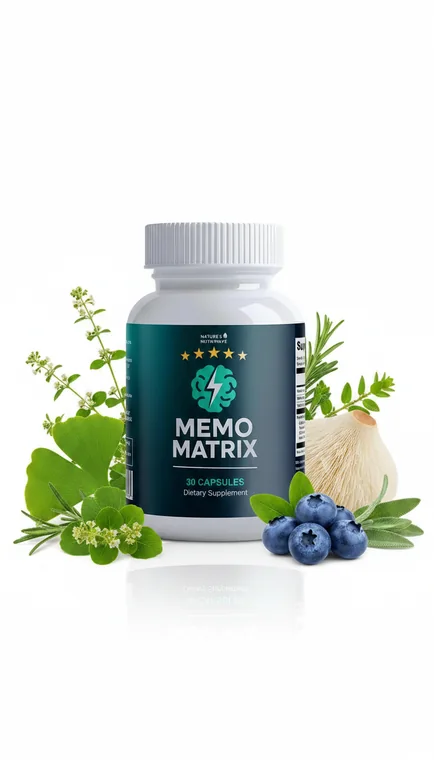
The broader-spectrum approach is exactly what a formula like Memo Matrix is built on. Its disclosed label combines Bacopa monnieri and Huperzine-A with Rhodiola rosea, L-tyrosine and a green-coffee energy blend of caffeine, theacrine and theobromine. If you want the trial-by-trial detail behind two of those anchors, our breakdown of the human research on Bacopa monnieri and Huperzine-A lays out what the studies do and do not support. The trade-off is straightforward: a broader stack covers more of the cognitive picture, but only if each ingredient is present at a meaningful, disclosed amount rather than sprinkled in for the label.
Neuriva vs a full stack: the head-to-head
The table below compares the two approaches on the factors that matter. Treat it as a way to think, not as a scoreboard: the right answer depends on what you want from a supplement and how much you are willing to spend per day.
| Factor | Neuriva (focused formula) | Broader-spectrum stack |
|---|---|---|
| Core actives | Coffee cherry extract + phosphatidylserine | Bacopa, Huperzine-A, plus citicoline / L-theanine / Rhodiola-type actives |
| Cognitive jobs covered | Neuron-signalling support and membrane structure | Memory formation, acetylcholine, attention, calm alertness, stress performance |
| Onset | Gradual, membrane-level | Same-day from theanine/caffeine; weeks for bacopa's memory effect |
| Ingredient transparency | Two named actives, easy to read | Best when each amount is disclosed, not hidden in a blend |
| Simplicity | High, easy to understand | Lower, more to learn |
| Cost-per-day logic | Compare price against two actives | Compare price against several studied actives |
The mistake buyers make is comparing sticker prices instead of comparing price per day against studied active received. A cheaper bottle that delivers less evidence-backed ingredient can be the more expensive choice once you do the arithmetic.
Weighing a broader-spectrum alternative?
If you want more studied actives per serving than a two-ingredient formula, see how a fully disclosed stack is priced. Check the current bundles and the money-back guarantee on the official store.
Compare Pricing & OptionsCost per serving: the number that actually decides value
Here is the calculation almost nobody does before buying, and it is the one that matters most. Take the price of the bottle, divide by the number of servings, and you have cost per day. Now hold that against what you receive for it: how many clinically studied actives, at what disclosed amounts. A focused two-ingredient product with a low cost per day can still be poor value if a broader stack, even at a slightly higher daily cost, delivers three or four evidence-backed ingredients at meaningful doses. Conversely, a broad stack full of token-dose botanicals can be terrible value at any price.
This is why disclosure is not a nicety, it is the whole game. You cannot compute value on a proprietary blend, because you do not know how the total weight is split. Any brand confident in its formula can prove it by publishing the amounts, and the ones that hide behind a blend are usually hiding something. If you are building a shortlist, our evidence-ranked guide to the best brain supplements in 2026 and our broader best memory supplement picks for 2026 both apply exactly this cost-per-studied-active lens across popular products.
Three objections, answered fairly
"Neuriva is a trusted name, so it must be the safest bet." Brand recognition tells you about marketing reach, not about dose depth. A well-known two-ingredient formula and a lesser-known five-ingredient one should both be judged on the same disclosed-amounts standard. Familiarity is comforting, but it is not evidence.
"More ingredients just means more filler." Sometimes true, which is precisely why breadth without disclosure is a red flag. But a broader formula that lists each active at a studied amount is not filler, it is coverage. The test is not "how many ingredients" but "how many disclosed at amounts that match the research." Judge the label, not the length of the list.
"Search interest suggests everyone is moving on from Neuriva." It is true that trend data over recent years shows steady interest in multi-active stacks while interest in some single-focus brands has softened. But popularity is a lagging, noisy signal and it is not the same as being right for you. Use trend data as a prompt to compare formulas, not as a substitute for doing so.
Medical note: this article is general information, not medical advice, and it is a comparison of formulas rather than an endorsement of any health outcome. Speak to a healthcare professional before starting any supplement, particularly if you are pregnant or nursing, sensitive to caffeine, under 18, taking medication or managing a health condition. No supplement diagnoses, treats, cures or prevents any disease.
So which should you choose?
If you value simplicity above all, want a recognizable name, and are specifically drawn to phosphatidylserine's membrane-support evidence, Neuriva is a defensible, honest choice and there is no shame in picking it. If you want more of the cognitive picture covered, the same-day steadiness of a theanine-and-caffeine pairing plus the slow-building memory support of bacopa, and you are prepared to read a longer label, a broader-spectrum stack such as Memo Matrix is the more complete option, provided its amounts are disclosed and it fits your cost-per-day math. Both routes are reasonable. The unreasonable route is buying on the brand you happen to recognize without ever comparing what a serving actually delivers.
Frequently asked questions
What are the best alternatives to Neuriva in 2026?
The strongest alternatives to Neuriva are broader-spectrum nootropic stacks that keep an evidence-backed base and add more studied actives. Instead of resting on coffee cherry extract and phosphatidylserine, they typically layer in Bacopa monnieri, Huperzine-A, citicoline and L-theanine so that memory, focus and calm alertness are each addressed. The best choice is the one whose full per-serving amounts are disclosed on the label so you can check them against the research.
How does Neuriva compare to a full nootropic stack?
Neuriva is a focused, two-active formula centered on coffee cherry extract and phosphatidylserine, which makes it simple and easy to understand. A full nootropic stack trades that simplicity for breadth, adding ingredients that target memory formation, acetylcholine and stress performance on different timescales. Neither approach is automatically better, but a broader stack covers more of the cognitive picture if the doses are honest and disclosed.
Is Neuriva or a multi-ingredient supplement better value?
Value depends on cost per day divided by the amount of studied active you actually receive, not on the sticker price alone. A cheaper two-ingredient product can be worse value than a broader stack if the broader stack delivers more clinically studied actives per serving. Work out the price per day for each option, then compare it against how many evidence-backed ingredients are disclosed at meaningful amounts.
Which brain supplement has more clinically studied ingredients?
Broader-spectrum stacks generally list more clinically studied ingredients than Neuriva, which concentrates on two. A fuller formula such as Memo Matrix combines Bacopa monnieri and Huperzine-A with Rhodiola, L-tyrosine and an energy blend, giving several actives with human research behind them. The figure that matters is not the count of ingredients but how many are disclosed at amounts that match the studies.
Scientific references
- NIH NCCIH — Cognitive function, dementia and dietary supplements
- Duan H. et al. — Effects of a food supplement containing phosphatidylserine on cognitive function in Chinese older adults with mild cognitive impairment: a randomized double-blind, placebo-controlled trial, Journal of Affective Disorders (2025)
- Calabrese C. et al. — Effects of a standardized Bacopa monnieri extract on cognitive performance, anxiety and depression in the elderly: a randomized, double-blind, placebo-controlled trial, Journal of Alternative and Complementary Medicine (2008)
- Kongkeaw C. et al. — Meta-analysis of randomized controlled trials on cognitive effects of Bacopa monnieri extract, Journal of Ethnopharmacology (2014)
- NIH Office of Dietary Supplements — fact sheets index
- FTC — Health Products Compliance Guidance
See a fully disclosed multi-active label
Bacopa, Rhodiola, L-tyrosine and Huperzine-A with a green-coffee energy blend, every amount published. Compare the bundle pricing and the 60-day money-back guarantee on the official store.
View Memo Matrix Options