Best Brain Inflammation Supplement: What Omega-3 and Curcumin Can and Cannot Do
Quick Answer: Is There a Best Brain Inflammation Supplement?
No single product earns that title, because no supplement has been shown to lower inflammation inside the living human brain and improve thinking as a result. Long-chain omega-3 fats, specifically EPA and DHA, carry the deepest safety record and the most human data, which makes them the most defensible starting point. Curcumin looks impressive in the laboratory but is held back in people by absorption so poor that the delivery system on the label matters more than the milligram count.
- Most defensible: EPA and DHA, judged by the actual milligrams on the panel, not the fish oil total.
- Most oversold: plain curcumin powder, which barely reaches the bloodstream at all.
- Key caveat: "anti-inflammatory" on a box is a marketing word, not a measured outcome in your head.
What "brain inflammation" actually means, and why the phrase is doing so much work
Neuroinflammation is a real biological process. Microglia, the immune cells resident in nervous tissue, respond to injury, infection and metabolic stress by releasing signalling molecules. In the short term that response is protective. When it becomes chronic and low-grade, researchers have observed associations with slower processing, low mood and the biology of age-related cognitive change. That is genuine science and it is why the topic gets so much attention.
The trouble starts when the phrase moves from a journal onto a bottle. Almost nothing sold as a brain inflammation supplement has been tested for its effect on inflammation in a human brain, because measuring that requires specialised imaging with radioactive tracers or a spinal fluid sample. What consumer products actually lean on is a chain of inference: a nutrient lowered an inflammatory marker in blood, or calmed microglia in a cell culture, or improved a behavioural test in rodents, therefore it must quiet your brain. Each link in that chain is plausible. None of them is proof, and the chain is only as strong as its weakest connection.
So the honest framing is this. Certain nutrients have a reasonable mechanistic case and, in some trials, measurable effects on mood or cognitive performance. Whether those effects run through inflammation, through membrane structure, through blood flow or through something else is largely unresolved. Buying on the strength of the word "inflammation" alone means buying a hypothesis. It is also why the hunt for the best brain inflammation supplement rarely produces a clean winner: the whole category is defined by a proposed mechanism rather than by a measured result.
Omega-3: EPA and DHA are not interchangeable
Fish oil is the most researched candidate here, and the first thing worth knowing is that "omega-3" describes a family, not a single compound. The three that matter commercially are ALA from plant sources such as flax and chia, and the two long-chain marine forms, EPA and DHA. Human conversion of ALA into EPA is limited, and conversion onward to DHA is more limited still. If a product's omega-3 content is mostly ALA, it should not be judged against research done with fish or algal oil.
EPA and DHA also do different jobs. DHA is a structural fat: it is heavily concentrated in neuronal membranes and in the retina, which is why it dominates discussion of brain development and membrane fluidity. EPA is more associated with signalling, including the production of specialised molecules involved in resolving an inflammatory response, and it is EPA-heavy formulas that have attracted the most attention in mood research. Products marketed for cognition often lead with DHA; products studied for mood often lead with EPA. Neither ratio is universally correct, but the label should at least tell you which one you are getting.
The most common practical mistake is reading the wrong number. A capsule advertised as 1000 mg of fish oil frequently contains something closer to 300 mg of combined EPA and DHA once you read the indented lines beneath the total. Cognition and mood studies have generally worked with combined intakes in the region of one to two grams per day — and a randomised, double-blind trial in EBioMedicine (2026) needed a high dose before DHA reached the central nervous system at all — which means several standard capsules rather than one. Anyone comparing the best brain health supplement for memory against a plain fish oil should be comparing actives per serving, not headline milligrams.
Curcumin's real problem is bioavailability, not potency
Curcumin, the yellow pigment group in turmeric, is one of the most studied natural compounds in existence, and in a test tube it does a remarkable number of things. It interacts with inflammatory signalling pathways, it behaves as an antioxidant, and in animal models it has shown effects on amyloid biology that generated enormous interest. If laboratory activity translated cleanly into human results, curcumin would be a household medicine by now.
It does not, and the reason is pharmacokinetics. Swallowed as ordinary turmeric powder, curcumin is poorly absorbed across the gut wall, rapidly conjugated by the liver and intestine, and cleared quickly. Blood concentrations after a normal culinary dose are so low that they are difficult to detect at all. Whatever curcumin achieves in a dish of cells at a fixed concentration says very little about what a capsule does to a person.
This is why the delivery system is the whole story with curcumin. Pairing it with piperine from black pepper slows one clearance pathway. Phospholipid complexes bind curcumin to a fat carrier that the gut handles more readily. Micellar, nanoparticle and gamma-cyclodextrin formats each aim at the same problem from a different angle. These approaches genuinely do raise measured blood levels, sometimes dramatically compared with raw powder. What they have not yet done is convert those higher levels into consistent, replicated improvements in human memory or attention. Better absorption is a necessary step, not a finished result.
Want a formula that shows its numbers?
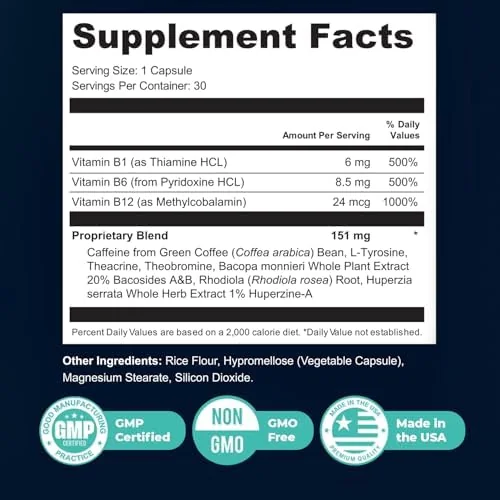
If you are working out where to buy brain supplements without guessing at a proprietary blend, start with a label that lists what is in it. Memo Matrix publishes its ingredients and amounts openly.
Check Availability & OptionsHow the leading forms compare on absorption, dose and evidence strength
The table below is a summary of typical commercial forms and how much weight the human evidence can bear. "Evidence strength" refers specifically to controlled human research on cognition or mood, not to laboratory or animal findings.
| Form | Typical daily amount in research | Absorption | Evidence strength for cognition |
|---|---|---|---|
| Fish oil (EPA + DHA) | Roughly 1–2 g combined EPA and DHA | Good, better with a meal containing fat | Moderate; mixed results in healthy adults, more consistent where baseline intake is low |
| Algal oil (mainly DHA) | Comparable DHA content to fish oil | Good; plant-derived alternative | Limited but growing; mostly extrapolated from fish oil data |
| ALA (flax, chia, walnut) | Grams per day | Absorbed well, but converts poorly to EPA/DHA | Weak as a stand-in for marine omega-3 |
| Plain curcumin powder | Often 500–1000 mg on labels | Very poor | Weak; blood levels usually too low to matter |
| Curcumin + piperine | Similar, plus a few mg piperine | Improved | Limited; piperine may affect some medications |
| Phospholipid or micellar curcumin | Varies widely by system | Substantially improved | Emerging; small studies, not yet replicated at scale |
The most common error in this category is treating a mechanism as an outcome. A compound that reduces an inflammatory marker in a dish has demonstrated a mechanism. A compound that helps a person remember a shopping list has demonstrated an outcome. Marketing routinely sells the first and implies the second.
What the human cognition data supports
Stripped of enthusiasm, the picture looks roughly like this. Long-chain omega-3 supplementation shows its clearest signal in people whose intake was low to begin with, which is unsurprising and also useful: if you rarely eat oily fish, you have more room to gain than someone who eats it twice a week. In an overview of systematic reviews published in Nutrients (2025), the benefit of long-chain omega-3 supplementation on cognitive decline was inconsistent once baseline intake was accounted for. In healthy, well-nourished adults the cognitive results of trials have been mixed, with several large studies finding no meaningful benefit on standard tests. Findings around mood, particularly with EPA-dominant formulas, have been somewhat more encouraging, though far from settled.
Curcumin's human cognitive literature is much thinner. There are small, mostly short trials using high-absorption formats, some reporting modest improvements on memory or attention measures. The most-cited of them, an 18-month double-blind trial of a bioavailable curcumin in non-demented adults (American Journal of Geriatric Psychiatry, 2018), enrolled forty people. These are the kind of studies that justify further research rather than a purchasing decision. Anyone quoting a dramatic percentage improvement from a curcumin product is almost certainly quoting a single small study, an animal experiment, or nothing at all.
It is also worth remembering that diet outperforms both. Dietary patterns rich in oily fish, vegetables, olive oil, nuts and legumes have far more supporting observational data for long-term brain health than any capsule, and the nutrients arrive in a package the body is used to handling. A supplement is a reasonable way to close a specific gap, and if you want to know which gaps are worth closing first, our guide to the vitamins for memory that actually have evidence behind them works through B12, folate, DHA and vitamin D in order of payoff. It is a poor substitute for the pattern itself.
Where the marketing outruns the evidence
Four patterns show up again and again in the competition to be called the best brain inflammation supplement, and once you can name them they are hard to unsee.
Borrowed authority. A product cites a study of a nutrient, not of itself. The study used a specific form at a specific dose for a specific population. The product may match none of those three. Citing research on 2 g of EPA while supplying 120 mg is technically accurate and practically meaningless — the same borrowed-authority move that makes so many people conclude that memory pills simply do not work, when what failed was the dose rather than the nutrient.
The proprietary blend. A blend discloses a total weight for a group of ingredients but not the split between them. This makes it impossible to check any ingredient against its research, and in practice the cheapest ingredients tend to occupy most of the weight. Any brand competing to be the best brain supplement brand on evidence rather than packaging has a straightforward way to prove it, which is to publish the amounts.
Mechanism as promise. Language such as "calms neuroinflammation" or "protects neurons" describes a hoped-for pathway as though it were a delivered result. Watch for verbs that assert an internal event nobody has measured in you.
Antioxidant sprawl. A long ingredient list of botanical extracts at token amounts looks thorough and is usually the opposite: many actives at doses too small to do anything, which is cheaper than a few actives at doses that match the research.
What this cannot do: the honest limits
There are several things no product in this category, including the one this site covers, is able to do, and stating them plainly is more useful than another benefit list.
It cannot diagnose, treat, cure or prevent any disease. Alzheimer's disease, other dementias, multiple sclerosis, long-term effects of head injury and depression are medical conditions that require proper assessment and care. A supplement is not an alternative to that, and any page suggesting otherwise is one to close.
It cannot demonstrate that it changed inflammation in your brain. You will not feel neuroinflammation fall, and no at-home test measures it. Any subjective improvement you notice could equally reflect better sleep, seasonal change, expectation or the simple fact of paying more attention to your habits.
It cannot outrun the basics. Sleep quality, cardiovascular fitness, blood pressure control, hearing loss management, alcohol intake and social engagement all have stronger and longer-running evidence behind them for cognitive ageing than any capsule on the market. A supplement sits on top of that foundation. It does not replace it. In later life the sensible order of operations is to measure the nutrient gaps that widen with age before adding anything discretionary on top of them.
Finally, more is not automatically better. High-dose fish oil can thin the blood and matters if you take anticoagulants or have surgery scheduled. Concentrated curcumin has been associated with digestive upset and, uncommonly, liver reactions, and piperine can alter how some medications are processed. These are real interactions, which is exactly why a pharmacist or doctor should see your list before you add to it.
How this fits alongside a nootropic like Memo Matrix
Omega-3 and curcumin sit in a different lane from the classic nootropic ingredients. They are structural and metabolic nutrients with slow, cumulative and hard-to-perceive effects. Ingredients such as Bacopa monnieri, L-tyrosine and Huperzine-A target learning, stress performance and neurotransmitter turnover on a different timescale, and we have looked at the trial data behind them in our piece on what the research shows for Bacopa monnieri and Huperzine-A.
The practical implication is that these two categories are not competitors and there is no reason to frame them as such. Someone who eats little oily fish has a nutritional gap that a marine omega-3 addresses. Someone who wants day-to-day support for focus and recall is asking a different question. If you want to see how a published, disclosed nootropic formula is put together before deciding what belongs in your routine, the ingredient breakdown on our Memo Matrix page lays out each component and the state of its evidence, including where that evidence is thin.
Medical note: this article is general information, not medical advice. Speak to a healthcare professional before starting any supplement, particularly if you take anticoagulants, are scheduled for surgery, are pregnant or nursing, or manage a liver or gallbladder condition. High-dose omega-3 and concentrated curcumin both have real interactions worth checking.
Frequently asked questions
Is there a single best brain inflammation supplement?
No single product holds that title, because no supplement has been shown to lower inflammation inside the human brain and improve thinking as a result. Long-chain omega-3 fats have the deepest safety record and the most human data behind them, so they are the most defensible starting point. Curcumin is interesting in the laboratory but limited in people by very poor absorption.
How much EPA and DHA should a brain supplement provide?
Read the panel for the actual milligrams of EPA and DHA rather than the total fish oil figure, because a 1000 mg capsule often carries only about 300 mg of combined EPA and DHA. Cognition and mood research has tended to use combined intakes in the range of roughly 1000 to 2000 mg per day, which usually means two or more standard capsules.
Does curcumin actually reach the brain?
Only in very small amounts. Plain curcumin powder is poorly absorbed, rapidly processed by the liver and quickly cleared, so blood levels stay low. Delivery systems such as piperine pairing, phospholipid complexes and nanoparticle formats raise absorption substantially, but higher blood levels are not the same thing as a proven effect on human memory.
Can a supplement reduce inflammation in the brain?
That is not something a dietary supplement can promise. Neuroinflammation is difficult to measure outside a research setting, and most consumer marketing borrows the word from studies of blood markers or animal models. Nutrients may support normal inflammatory balance as part of an overall diet, but anyone with a diagnosed condition should be guided by a clinician, not a label.
Scientific references
- NIH Office of Dietary Supplements — Omega-3 Fatty Acids fact sheet for health professionals
- NIH NCCIH — Turmeric and curcumin: what the science says
- NIH NCCIH — Cognitive function, dementia and dietary supplements
- Harvard T.H. Chan School of Public Health — The Nutrition Source: Omega-3 fatty acids
- Yassine H.N. et al. — CNS target engagement of high-dose DHA supplementation in older adults at risk for dementia: a randomised, double-blind, placebo-controlled trial, EBioMedicine (2026)
- Barros M.I. et al. — Omega-3 polyunsaturated fatty acids and cognitive decline in adults with non-dementia or mild cognitive impairment: an overview of systematic reviews, Nutrients (2025)
- Small G.W. et al. — Memory and brain amyloid and tau effects of a bioavailable form of curcumin in non-demented adults: a double-blind, placebo-controlled 18-month trial, American Journal of Geriatric Psychiatry (2018)
See what a disclosed nootropic label looks like
Bacopa, Rhodiola, L-tyrosine and Huperzine-A with a green-coffee energy blend, every ingredient and amount published rather than buried in a blend.
View Memo Matrix Options