Best Brain Supplement for Kids: What to Ask a Pediatrician First
Quick Answer: What Is the Best Brain Supplement for Kids?
For most healthy children the honest answer is none. Food, sleep and time cover what a developing brain needs, and no supplement has been shown to make a well-nourished child think, concentrate or learn better. Where a genuine shortfall exists, most often iron or vitamin D, the right product is the single nutrient a pediatrician identifies at a dose matched to the child's age and weight, and that is a decision made after a conversation rather than after a search.
- Go to the appointment first: take a week of eating and sleeping notes with you.
- Ask about causes, not products: sleep, hearing, vision, iron and mood all affect school performance.
- Never give adult nootropics to a child: they contain stimulants and adult-dosed actives.
Start by naming the worry, because it shapes the answer
Parents rarely search for a children's brain supplement out of idle curiosity. Something prompted it: a teacher's comment, a school report, difficulty getting through homework, a child who seems tired or distracted, or a comparison with a sibling or classmate. The specific worry matters enormously, because the useful response to each one is different, and almost none of them is a capsule.
Trouble concentrating in class can reflect poor sleep, undiagnosed hearing loss, an uncorrected vision problem, anxiety, boredom in a mismatched curriculum, a learning difference, or a genuine attention condition. Fatigue can reflect low iron, poor sleep quality, low mood, or a growth spurt. Slower reading progress often reflects nothing more than being at a normal point on a wide developmental curve. These have real, targeted responses, and the first step towards all of them is the same: a conversation with the child's doctor.
This is why a search for the best brain supplement for kids is usually the right worry attached to the wrong tool. The worry is worth acting on. The tool almost never is.
What a developing brain actually runs on
The nutrients most clearly tied to children's cognitive development are unglamorous and mostly come from ordinary food. Iron supports oxygen transport and is one of the few deficiencies with a well-documented relationship to attention and learning in children, although a 2025 meta-analysis in Neuroscience & Biobehavioral Reviews found the cognitive benefit of supplementing iron in children who are not anaemic is much less clear-cut. Iodine matters for thyroid function and neurological development. Zinc, vitamin B12 and folate are involved in growth and nerve function. Long-chain omega-3 fats, particularly DHA, are structural components of neural membranes, though a 2025 meta-analysis in Nutrients found the cognitive effect of supplementing them in early life depends heavily on the dose and on the ratio to arachidonic acid. Vitamin D is widely under-consumed in many countries and is routinely supplemented in infancy on medical advice.
Notice what is absent from that list: every ingredient that dominates nootropic marketing. Bacopa, Rhodiola, Huperzine-A, theacrine, high-dose caffeine and similar compounds are studied almost exclusively in adults, and mostly in small trials. There is no meaningful body of paediatric safety data behind them, and absence of evidence in a growing brain is a reason for caution rather than a gap to fill with optimism.
Two habits also matter more than anything sold in a bottle, and the adult version of the same argument runs through our guide to vitamins for memory that have real evidence: correct a measured shortfall, and otherwise let food do the work. Sleep is the first: school-age children need substantially more of it than adults, and chronic short sleep produces exactly the symptoms parents describe as poor concentration. Breakfast is the second, mainly because a hungry child performs worse regardless of what supplements are in the cupboard.
Looking for something for yourself, not the children?
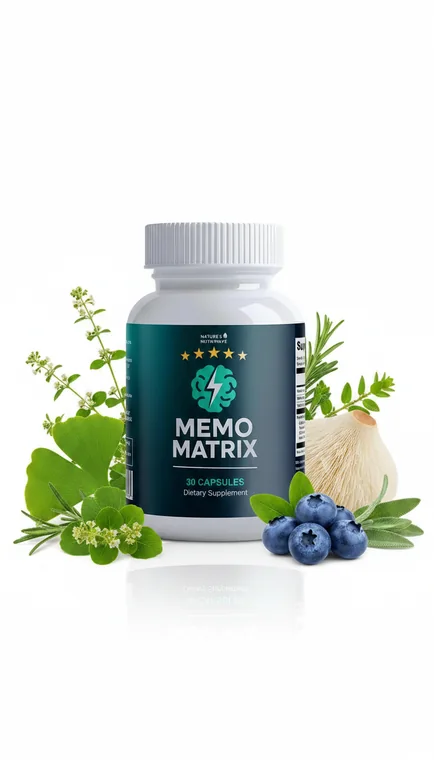
Memo Matrix is an adults-only formula. If you are the one comparing where to buy brain supplements for your own focus and recall, the full ingredient panel is published rather than hidden in a blend.
See Memo Matrix (Adults Only)The questions worth bringing to the appointment
Appointments are short, so going in with specific questions changes what you get out of one. These are the ones that tend to produce useful answers.
"Here is what my child eats in a typical week. Does anything look thin?" Bring a rough note rather than a perfect diary. A doctor or dietitian can spot a pattern, such as no red meat and no fortified cereal, that points at iron, far faster than a general question about nutrition.
"Is a blood test for iron or vitamin D warranted here?" This turns guesswork into information. Testing is not always indicated, and the answer may well be no, but asking makes the reasoning visible.
"Could this be sleep, hearing or vision?" All three are common, all three masquerade as concentration problems, and all three have direct fixes. Hearing and vision screening in particular are easy to skip and easy to arrange.
"Is what I am describing within the normal range for this age?" Developmental variation is wide. A calm, specific answer to this question resolves a great many worries on the spot.
"If we did add a supplement, which single nutrient and what dose?" This reframes the request away from a branded blend and towards something checkable. A single nutrient at a paediatric dose is a different proposition from a nine-ingredient formula.
"Would you want to see my child again if nothing changes in a few months?" A follow-up plan is worth more than a product, because it turns a one-off worry into something being tracked.
The answers that mean no supplement is needed
Several replies are, in effect, a clear no, and recognising them saves money and unnecessary dosing.
"Growth and development are tracking normally" means the underlying machinery is working. "The diet looks broadly adequate" means there is no gap for a supplement to fill, and adding nutrients above requirement does not improve performance in a child who already has enough. "This sounds like a sleep pattern" points to bedtimes, screens and routine, none of which a capsule addresses. "Let us check hearing first" means the concentration problem may not be a concentration problem at all. And "let us watch it for a term" is an active plan, not a brush-off.
If the answer is instead that a specific deficiency is likely or confirmed, then the best brain supplement for kids in that situation is simply the nutrient identified, at a paediatric dose, monitored over time. That is a completely different situation from buying a general children's brain formula, or the best brain booster supplement for kids according to an advertisement, because a website suggested one.
How children's supplement categories compare on evidence
The table sets out what is reasonably supported for children, what is uncertain, and what does not belong anywhere near them. "Evidence strength" refers to controlled research in children specifically.
| Category | When it may be appropriate | Evidence strength in children | Main caution |
|---|---|---|---|
| Iron | Confirmed or suspected deficiency, guided by testing | Good where deficiency exists; none where it does not | Overdose is genuinely dangerous; a leading cause of poisoning in young children |
| Vitamin D | Routinely advised in infancy and where sunlight or intake is low | Good for bone health; cognition claims are not established | Follow paediatric dosing, not adult drops |
| Omega-3 (DHA/EPA) | Little or no fish in the diet | Mixed and inconsistent for attention and learning | Fishy aftertaste reduces adherence; check the actual DHA amount |
| Standard children's multivitamin | Very restricted diets, some medical conditions | Weak for cognition in well-fed children | Gummies often contain sugar and can be mistaken for sweets |
| Herbal nootropic blends | Not established for children | Essentially absent in paediatric populations | Adult-only dosing and unstudied safety in growth |
| Caffeine or stimulant formulas | Not appropriate | Not applicable | Affects sleep, heart rate and anxiety; keep out of reach |
A supplement can only fill a gap. If a child does not have the gap, the supplement has nothing to do, and the money would buy more benefit as an earlier bedtime, a hearing test or a library card.
Why adult nootropics are not children's products
This point deserves stating without hedging, because search results blur the two categories constantly. Adult nootropic formulas, including the one covered on this site, are built around adult physiology. They commonly contain caffeine or related stimulants at doses set for a fully grown body, botanical extracts trialled only in adults, and compounds such as Huperzine-A that act on the nervous system in a genuinely pharmacological way.
Children are more sensitive to stimulants, have lower body weight, are still developing neurologically, and cannot easily report side effects. A formula that is reasonable for a forty-year-old is not a smaller version of a children's product, and cutting a capsule in half does not make it one. Products of this type carry adult labelling for a reason and should be stored out of reach in the same way as any medicine.
What this cannot do: the honest limits
No supplement makes a child more intelligent. There is no product that raises a healthy child's cognitive ceiling, and claims in that direction are not supported by evidence in any age group, let alone in children.
No supplement treats, cures or prevents any condition. Attention conditions, learning differences, autism, anxiety and mood disorders are clinical matters that need proper assessment and evidence-based support. Marketing that gestures at these conditions while selling a food supplement is exploiting worried parents, and it is worth walking away from.
No supplement compensates for sleep, and this is probably the single most useful sentence in this article. It is the same conclusion we reach for adults in our review of which brain fog supplements actually work: nothing in a capsule outperforms a full night of rest. Chronic short sleep in school-age children looks almost exactly like the problem parents are trying to solve. Fixing sleep is unglamorous, free and far more likely to change something.
And no supplement substitutes for information. Anyone weighing up whether brain supplements are worth it for a child is really asking whether something is missing. A pediatrician can find out. A product page cannot. The same logic runs the other way up the age range: for grandparents the honest starting point is also measurement, which is why we argue for testing nutrient status before buying anything for an older adult.
Where a formula like Memo Matrix fits, and who it is for
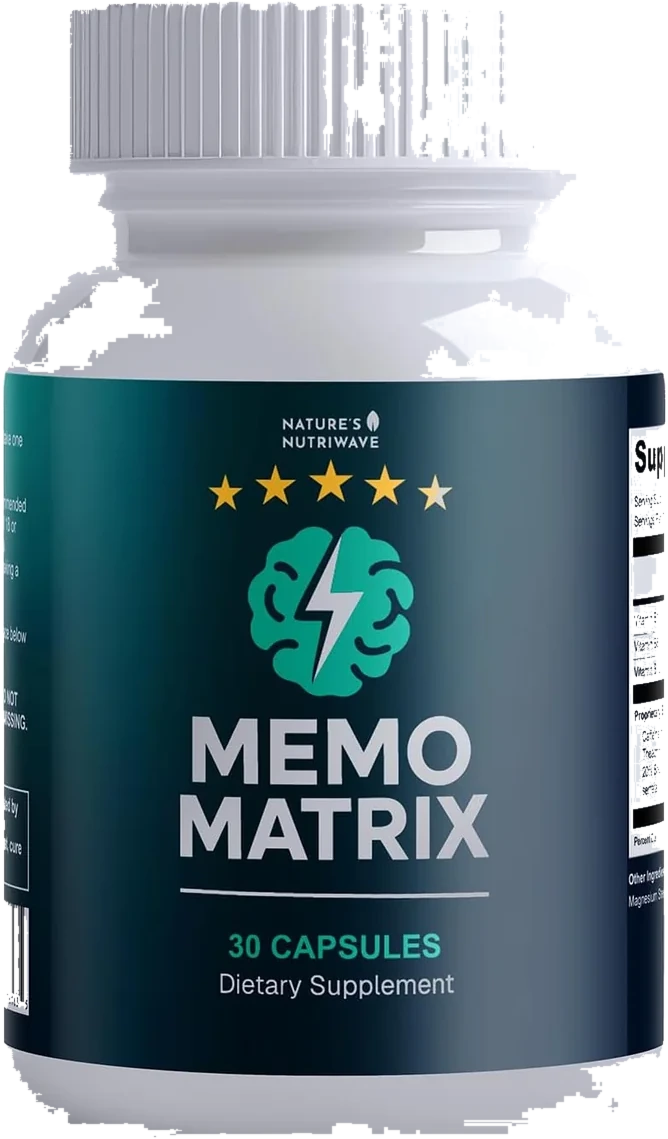
Memo Matrix is a nootropic formulated for adults, and nothing on this page should be read as suggesting otherwise. It combines Bacopa monnieri, Rhodiola, L-tyrosine and Huperzine-A with a green-coffee caffeine blend, which is a set of ingredients chosen for adult focus and recall, and the caffeine content alone rules it out for children. The full breakdown of what is in it and what the research supports is set out on our Memo Matrix page, along with the places where the evidence is thin.
If you are a parent who ended up here while looking for the best brain nutrition supplement for children and are now wondering about your own concentration, that is a more appropriate use of a formula like this one. The trial data behind its two headline memory ingredients is covered in our piece on what the research shows for Bacopa monnieri and Huperzine-A, including how long they take and where the studies stop.
Medical note: this article is general information, not medical advice, and it is not a substitute for a consultation about a specific child. Do not give a child any supplement, including one bought over the counter, without checking with a pediatrician first. Store all supplements out of reach; iron products in particular are a serious poisoning risk for young children.
Frequently asked questions
What is the best brain supplement for kids?
For most healthy children the honest answer is none, because food and sleep cover what a developing brain needs and no supplement has been shown to make a well-nourished child think better. Where a genuine shortfall exists, such as low iron or low vitamin D, the right product is the single nutrient a pediatrician recommends at a dose matched to the child's age and weight. Multi-ingredient nootropic blends made for adults are not appropriate for children.
What should I ask a pediatrician before buying a supplement for my child?
Ask whether anything in the child's growth, sleep, hearing, vision or school reports points to a physical cause worth investigating. Ask whether a blood test for iron or vitamin D is warranted given the child's diet. Ask what a normal picture would look like at this age, and ask directly whether adding a supplement would change anything. Bring a rough record of what the child eats and sleeps in a typical week.
Can children take adult nootropic supplements?
No. Adult nootropic formulas frequently contain caffeine and other stimulants, botanical extracts studied only in adults, and pharmacologically active compounds such as Huperzine-A. Doses are set for adult body weight and adult physiology. Products of this kind are labelled for adults and should be kept out of reach of children, in the same way as any other adult supplement or medicine.
Are omega-3 supplements worth giving to children?
The evidence is mixed and mostly unimpressive in children who already eat reasonably well. Trials of omega-3 supplementation for attention and learning in children have produced inconsistent results, with the clearest signals in children whose baseline intake was low. Two servings of fish a week, or a pediatrician-guided supplement if fish is not eaten at all, is a more grounded approach than dosing on the strength of an advertisement.
Scientific references
- NIH Office of Dietary Supplements — Iron: consumer fact sheet
- Fiani D. et al. — Psychiatric and cognitive outcomes of iron supplementation in non-anemic children, adolescents and menstruating adults: a meta-analysis and systematic review, Neuroscience & Biobehavioral Reviews (2025)
- NIH Office of Dietary Supplements — Omega-3 fatty acids: consumer fact sheet
- Mayo Clinic — Nutrition for kids: guidelines for a healthy diet
- Harvard T.H. Chan School of Public Health — Kids Healthy Eating Plate
- Tian A. et al. — Effects of different proportions of DHA and ARA on cognitive development in infants: a meta-analysis, Nutrients (2025)
- Barros M.I. et al. — Omega-3 polyunsaturated fatty acids and cognitive decline in adults with non-dementia or mild cognitive impairment: an overview of systematic reviews, Nutrients (2025)
An adults-only formula, with the label in the open
Bacopa, Rhodiola, L-tyrosine and Huperzine-A with a green-coffee energy blend. Every ingredient and amount published, and clearly labelled for adult use.
View Memo Matrix Options