Best Brain Supplement for Elderly Routines: A Pill-Burden Check
Quick Answer: How Do You Pick the Best Brain Supplement for Elderly Users?
Start with the daily pill count, not the ingredient list. For an older adult already taking several prescriptions, the supplement most likely to help is the simplest one a pharmacist has checked against everything else being swallowed that day, in a capsule size the person can comfortably manage. A product that is skipped, split, forgotten or hard to get down delivers nothing, no matter how good the formula looks on paper — which is one more reason people conclude that memory pills do not work when what actually failed was adherence.
- First step: lay every bottle on the table and count what is actually taken each day.
- Second step: take that full list, supplements included, to a pharmacist before adding anything.
- Third step: favour once-daily dosing and a capsule that is easy to swallow.
Pill burden is the constraint nobody puts on the label
Ask most people what makes a supplement good and they will talk about ingredients. Ask a geriatric pharmacist and they will talk about how many things the person is already taking. Polypharmacy, the everyday reality of managing several medicines at once, is one of the defining features of health in later life. Blood pressure tablets, a statin, something for reflux, a thyroid tablet, an inhaler, eye drops, a blood thinner, plus whatever has accumulated in the cupboard over the years. It adds up quickly, and every addition raises the odds of a mistake. It is also the reason the best brain supplement for elderly users is so often the least complicated one on the shelf rather than the most impressive. A 2026 systematic review in Geriatrics & Gerontology International found that structured deprescribing in primary care can reduce the number of medicines taken without harming outcomes, which is the direction of travel worth respecting before adding to the pile.
Each new item brings three costs that a marketing page never mentions. There is a cognitive cost, because remembering a more complex schedule is harder precisely for the person whose memory prompted the search in the first place. There is an interaction cost, because more compounds means more chances for one to affect another. And there is a physical cost, because swallowing many capsules a day is genuinely unpleasant for some people and impossible for others.
This is why anyone shopping for the best brain health supplement for seniors should treat simplicity as a feature rather than a compromise. A three-capsule, twice-daily protocol requires six swallowing events and two remembered times. A single daily capsule requires one of each. Over a year, that difference decides whether the product is taken as intended or abandoned in a drawer — which matters, because when a randomised trial in the American Journal of Clinical Nutrition (2023) found a small memory benefit from a daily multivitamin in older adults, the intervention was one tablet a day taken consistently for years.
Swallowing difficulty is common, and people rarely mention it
Difficulty swallowing tablets and capsules becomes more common with age for several overlapping reasons: reduced saliva production, often as a side effect of medicines already being taken; changes in throat muscle coordination; dry mouth from mouth-breathing or certain conditions; and simple anxiety after one bad experience of a capsule sticking.
What makes this a hidden problem is that people are embarrassed by it. Rather than saying "I cannot get that one down", they quietly stop taking it, or they break capsules open, or they crush tablets that should never be crushed. Crushing a modified-release tablet can release an entire day's dose at once, which is a genuine safety issue rather than a technicality. Opening a capsule can turn something designed to bypass the stomach into something that does not.
The practical response is to raise it directly and without fuss. Ask whether any current pills are hard to swallow. Ask whether any are being crushed or split, and if so, check with a pharmacist whether that specific product tolerates it. And before committing to a multi-month package of anything new, find out how big the capsule is. A product photograph rarely shows scale, and a large softgel is a common reason a purchase goes unfinished.
Prefer a single daily capsule?
If you are comparing where to buy brain supplements that do not add three more swallowing events to the day, start with the format and the disclosed label rather than the claim.
See Memo Matrix OptionsFormats compared: what each one costs you in daily effort
The table below compares the common delivery formats on the criteria that matter when a regimen is already full. None of these is inherently superior; the right answer depends on the person. The rest of the purchase checklist — disclosed doses, third-party testing and honest claims — is set out in our nootropic supplement buyer's guide.
| Format | Typical daily servings | Ease of swallowing | Best suited to |
|---|---|---|---|
| Once-daily capsule | 1 | Good if the capsule is small | Someone with a crowded schedule who manages capsules well |
| Multi-capsule stack | 2 to 6 | Harder; more swallowing events | People comfortable with pills who want higher per-nutrient amounts |
| Large softgel | 1 to 3 | Often the hardest format | Oil-based nutrients where no alternative exists |
| Powder or drink mix | 1 | Easy if taste is acceptable | Anyone with swallowing difficulty; needs a steady hand for measuring |
| Liquid or drops | 1 | Easiest | Marked swallowing difficulty; dosing accuracy needs care |
| Chewable or gummy | 1 to 2 | Easy | Those who cannot swallow pills; watch added sugar and lower nutrient amounts |
The pharmacist conversation, and exactly what to bring
A community pharmacist is the most accessible and most underused expert in this whole process. In many countries a structured medicines check is available free of charge, no appointment required beyond a phone call, and it is specifically designed to catch the problems described above. Supplements are squarely within scope. The mirror-image conversation happens at the other end of life, where the questions worth asking a pediatrician are similarly about ruling things out rather than adding things in.
What makes the conversation productive is preparation. Bring the actual containers rather than a remembered list, because doses are frequently misremembered and the strength printed on the box is the part that matters. Include everything: prescriptions, anything bought over the counter, vitamins, herbal products, and anything ordered online. Include things taken occasionally, such as a painkiller a few times a week, because occasional use still interacts.
Then ask specific questions rather than general ones. Does anything here duplicate anything else? Is anything on this list a plausible contributor to tiredness, dizziness or confusion? Is there anything I could reasonably stop? Can this new product go alongside everything else? Is there anything here that should not be taken at the same time of day as something else? Are any of these hard to swallow in a version I do not have to swallow?
That last question is worth asking out loud, because pharmacists know which products come in liquid or dispersible versions and consumers usually do not.
Adding is easy and subtracting is hard, but subtracting is where the real gains usually are. Before adding a capsule to a crowded routine, it is worth asking a professional whether anything already in it has outlived its purpose.
Interactions and cautions that matter most in later life
Several categories deserve particular attention in older adults, and they come up constantly in this product space.
Blood thinners. Anticoagulant and antiplatelet medicines are common after a cardiac event or with atrial fibrillation. High-dose fish oil, vitamin E, ginkgo, garlic extracts and several other popular ingredients can influence bleeding risk. This combination genuinely needs professional input rather than an internet opinion.
Caffeine and stimulant blends. Many nootropic formulas, including the one this site covers, contain caffeine or related compounds. In later life caffeine can matter more, not less, because it can raise blood pressure, disturb sleep, worsen tremor, aggravate reflux and increase the need to get up at night, which itself raises fall risk. Anyone with a heart rhythm disorder, uncontrolled hypertension or an anxiety condition should discuss stimulant-containing products with a clinician before starting.
Cholinergic ingredients. Huperzine-A is pharmacologically active on the same broad system as some prescription drugs used in cognitive decline. That means it should not be assumed to be harmless simply because it is sold without a prescription, and it should certainly not be combined with a prescribed cholinesterase inhibitor without medical advice.
Kidney and liver function. Both change with age, which affects how compounds are cleared. A dose that was fine at fifty is not automatically fine at eighty, and this is one more reason the same conversation is worth having again periodically.
What this cannot do: the honest limits
Being straightforward here matters more than usual, because the people searching for the best brain memory supplement for seniors are often worried relatives, and worry is easy to sell to.
No supplement treats, cures, prevents or reverses dementia. If an older adult is becoming forgetful in a way that affects daily life, gets lost in familiar places, repeats questions, or has changed in personality, that warrants a medical assessment. Some of what is found in such an assessment can be addressed: thyroid disorders, vitamin B12 deficiency, depression, poorly treated sleep apnoea, hearing loss and side effects of existing medicines are all on that list, and all are far more actionable than a capsule.
No supplement compensates for a regimen that is not being followed. If half the current pills are being missed, adding a new one makes things worse rather than better. Sorting adherence out with a dosette box, a pharmacy blister pack, a phone alarm or a simplified schedule will do more good than any purchase.
And no formula overcomes the evidence problem that runs through this category: multi-ingredient blends are rarely tested as finished products, results in healthy older adults are modest at best, and effects that do appear tend to be small and slow. Anyone promising a dramatic transformation for an elderly parent is not describing the research.
Where a formula like Memo Matrix fits, and where it does not
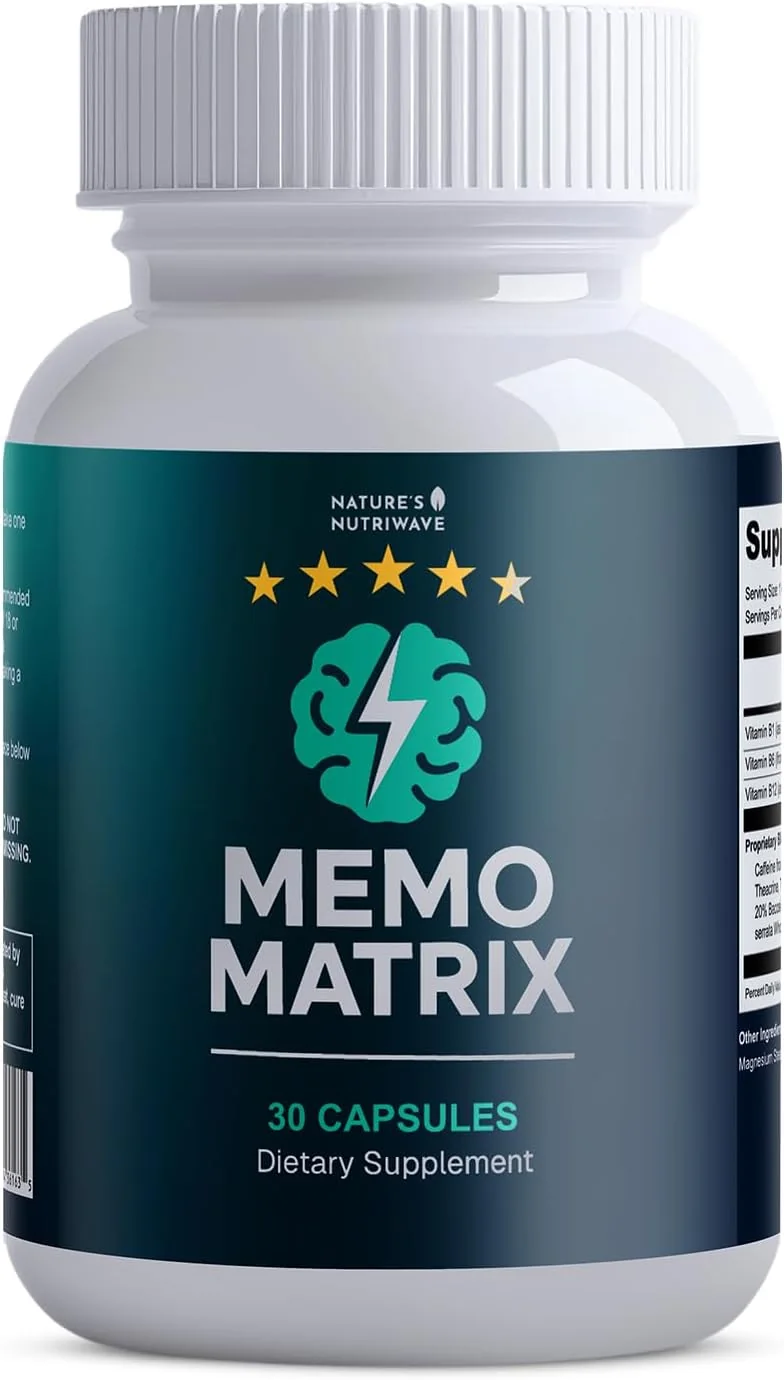
Judged by the criteria in this article, the best brain supplement for elderly routines is whichever one survives the pharmacist check and the swallowing test. Memo Matrix is a once-daily capsule with a disclosed ingredient list, which puts it on the right side of the two format questions that matter most here: how many swallowing events it adds, and whether you can check what is in it. Those are real practical advantages over a multi-scoop stack or an undisclosed proprietary blend, and you can see the full ingredient breakdown on our Memo Matrix page.
It also contains a green-coffee caffeine blend and Huperzine-A, and for a specific slice of older adults that combination is a reason for caution rather than enthusiasm. Someone with a heart rhythm problem, poorly controlled blood pressure, significant sleep difficulty, or an existing prescription for a cognitive medicine should treat it as a product to raise with a clinician, not one to try quietly. That is not a criticism of the formula, it is what taking stimulant and cholinergic ingredients seriously looks like.
If the underlying question is whether something is actually missing from the diet, that is a different and often better place to start, and we have set out the nutrients worth checking first in our guide to checking nutrient gaps before buying a formula for older adults.
Medical note: this article is general information, not medical advice. Do not stop, start or change any prescribed medicine on the basis of a web page. Speak to a doctor or pharmacist before adding a supplement to an existing regimen, especially where blood thinners, heart rhythm medicines or cognitive medicines are involved.
Frequently asked questions
What is the best brain supplement for elderly people already taking several medicines?
The best choice is usually the simplest one that a pharmacist has cleared against the existing list. When someone already takes six or eight items a day, a single once-daily capsule with a short, fully disclosed ingredient list is far more likely to be taken correctly than a three-times-daily powder. Fit with the current regimen matters more than the length of the ingredient panel.
Are large capsules a real problem for older adults?
Yes, and it is under-discussed. Swallowing difficulty becomes more common with age, and a large softgel or a horse-pill tablet is a frequent reason people quietly stop taking something. Before buying a multi-month package, it is worth checking the capsule size, whether the product can be taken with food, and whether a liquid, powder or chewable version of the same nutrient exists.
Should a pharmacist see the supplement list too, not just the prescriptions?
Absolutely. Pharmacists routinely find interactions between prescription medicines and things bought off a shelf, and they can only do that if they see everything. Bring the actual bottles or clear photographs of the labels, including vitamins, herbal products and anything bought online, because the interaction risk sits in the ingredients rather than the category.
Can a brain supplement help with memory loss in an older person?
No supplement treats memory loss, and noticeable memory change in an older adult deserves a medical assessment rather than a purchase. Some causes found in that assessment are reversible, including thyroid problems, vitamin B12 deficiency, sleep disorders, depression and side effects of existing medicines. Supplements are for supporting general nutrition and wellbeing, not for addressing a symptom that has not been explained.
Scientific references
- National Institute on Aging (NIH) — Safe use of medicines for older adults
- Mayo Clinic — Dysphagia: symptoms and causes of swallowing difficulty
- NIH Office of Dietary Supplements — Vitamin B12 fact sheet for health professionals
- Harvard Health Publishing — Staying healthy: medicines and ageing
- Yeung L.K. et al. — Multivitamin supplementation improves memory in older adults: a randomized clinical trial, American Journal of Clinical Nutrition (2023)
- Oliveira E.M. et al. — Optimizing medication use in older adults in primary care: a systematic review of the effectiveness of deprescribing interventions, Geriatrics & Gerontology International (2026)
- Papazachariou A. et al. — Vitamin B12 deficiency among older adults and its associations with geriatric syndromes, Current Opinion in Clinical Nutrition and Metabolic Care (2026)
One capsule a day, one label you can read
See the full Memo Matrix ingredient panel and format details before you decide whether it belongs in an existing routine.
View Memo Matrix Options