Magnesium L-Threonate Brain Benefits Explained
Quick Answer: What Are the Brain Benefits of Magnesium L-Threonate?
The magnesium L-threonate brain benefits come down to delivery: unlike common magnesium forms, this one (branded Magtein) is designed to cross the blood-brain barrier and raise magnesium inside the brain, which supports the receptors involved in learning and memory. A randomized double-blind trial reported effects on cognition and sleep, though much of the strongest data is still from animal models, so the human upside is real but modest.
- Why it's special: built to reach the brain, not just raise blood magnesium.
- Typical dose: 1,500–2,000 mg/day (~100–145 mg elemental), split with food.
- Honest caveat: most dramatic findings are animal-model; human evidence is early.

Magnesium is one of the most important minerals in the body, involved in hundreds of enzymatic reactions, and a large share of people do not get enough of it from diet alone. But if you have been reading about nootropics, you have probably noticed that one particular form keeps coming up when the conversation turns to the brain: magnesium L-threonate. This article explains the magnesium L-threonate brain benefits in plain language, why the form matters so much, what the human research does and does not show, how to dose it correctly, and where the honest limits are. No hype, no disease claims, just the science and the practical detail.
The headline you need up front is this: magnesium L-threonate is interesting not because it contains more magnesium than other forms, but because of where that magnesium is designed to go. It is the delivery, not the dose, that makes it a nootropic talking point. Let us unpack why.
Why the form matters: crossing the blood-brain barrier
All magnesium supplements raise magnesium somewhere. The difference between forms is mostly about how well they are absorbed from the gut and, crucially for cognition, whether they meaningfully raise magnesium concentration inside the brain. The brain is protected by the blood-brain barrier, a selective gatekeeper that keeps most substances out. Ordinary magnesium salts, such as oxide or citrate, raise blood and body magnesium but do a poor job of lifting the level inside the central nervous system.
Magnesium L-threonate, developed and marketed under the trademark Magtein, was formulated specifically to address that. Bound to threonate, a metabolite of vitamin C, the magnesium is carried in a form that research suggests raises brain magnesium more effectively than conventional salts. Why does brain magnesium matter for thinking? Magnesium sits at a control point on the NMDA receptor, a key player in synaptic plasticity, the cellular process underlying learning and memory. In simple terms, adequate magnesium in the brain supports the machinery that lets connections between neurons strengthen. Raise the magnesium available at those synapses and, in theory, you support that machinery. That is the entire rationale, and it is a genuinely elegant one.
What the human data actually shows, and what it doesn't
Here is where honesty earns its keep, because this is exactly the place where marketing tends to sprint ahead of evidence. The enthusiasm around magnesium L-threonate originated largely in animal research: the founding paper, Slutsky and colleagues in Neuron (2010), showed increases in synaptic density and improvements on memory tasks in rodents after raising brain magnesium. Those results were striking and they are why the ingredient took off. But rodent brains are not human brains, and a dramatic effect in a mouse is a hypothesis to test in people, not a proven human benefit.
On the human side, the notable evidence includes the MMFS-01 randomised, double-blind, placebo-controlled trial in the Journal of Alzheimer's Disease (2016), which examined magnesium L-threonate's effects on cognitive measures in older adults with cognitive impairment and reported benefits, alongside a later trial in healthy Chinese adults published in Nutrients (2022) and signals around sleep quality. That is meaningful; a randomized double-blind design is the gold standard, and it is far more than most novelty ingredients can point to. But it is a limited body of work: relatively small, and not yet replicated at the scale that would let anyone speak in confident absolutes. The fair summary is that magnesium L-threonate has a plausible mechanism, encouraging early human data, and a great deal of animal-model support that has not yet been fully confirmed in people. Promising is the right word. Proven is not.
It is also worth separating two things the ingredient may help with. The cognitive angle, memory and learning support, rests mostly on the mechanism and the early trial. The sleep and calm angle is something a lot of users report and is consistent with magnesium's broader role in relaxation and nervous-system regulation. If you are interested in how magnesium fits alongside other nutrients with cognitive relevance, our overview of the vitamins for memory that actually have human evidence puts it in context with B-vitamins, omega-3s and the rest.
Correct dosage: how much magnesium L-threonate, and when
Getting the dose right starts with understanding a number that confuses almost everyone. The typical amount used with Magtein is roughly 1,500 to 2,000 mg of magnesium L-threonate per day. That sounds like a lot of magnesium, but it is not, because the compound is mostly threonate by weight. Those 1,500 to 2,000 mg supply only about 100 to 145 mg of actual elemental magnesium, which is the figure that counts against magnesium intake guidelines. This is the single most misread fact about the ingredient: the big number on the front is the compound, not the mineral.
Practically, that daily amount is usually split into two or three servings taken with food, which improves tolerance and smooths absorption. Because of the sleep and relaxation angle, many people take a portion in the evening. Sensible practice is to start at the lower end of the range to gauge how your stomach responds, then adjust within the label's guidance. And a genuinely important point of context: the elemental magnesium from L-threonate counts toward your total daily magnesium from all sources, including other supplements and fortified foods, so do not stack multiple magnesium products without accounting for the combined elemental total.
| Consideration | Practical detail |
|---|---|
| Typical daily dose | 1,500–2,000 mg magnesium L-threonate (Magtein) |
| Elemental magnesium supplied | Roughly 100–145 mg |
| How to split | 2–3 servings with food; some taken in the evening |
| Best used | Consistently, daily, over several weeks |
| Onset | Sleep/calm within days to weeks; cognitive support builds gradually |
| Caution group | Kidney disease requires medical supervision |
Building a complete daily routine?
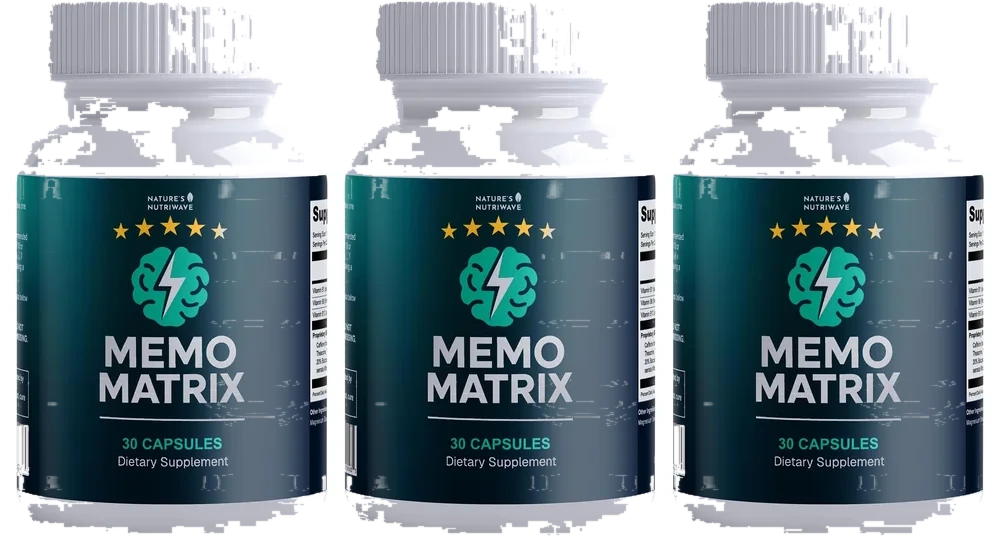
Magnesium supports the foundation; a disclosed nootropic stack targets memory, focus and calm alertness on top of it. See how a fully published formula is put together and priced on the official store.
Explore the Stack & PricingSide effects, timeline and safety
For most healthy adults, magnesium L-threonate is well tolerated, and its side effects are dose-dependent and predictable. The most common are digestive: loose stools, nausea or stomach discomfort, which is true of magnesium supplements generally and is eased by taking the dose with food and splitting it across the day rather than swallowing it all at once. Some users report mild headaches or, given the evening-relaxation effect, drowsiness, which is why the bedtime portion is popular rather than problematic.
On timeline, expectations should match the mechanism. Any sleep or calm effect tends to show up early, within the first days to a couple of weeks for people who notice it at all. Cognitive support, where it occurs, is a slower story: it builds gradually over several weeks of consistent daily use as brain magnesium status improves. Like most nutrients, it rewards steady use, not occasional dosing, and, as always, results vary from person to person.
The safety point that must not be glossed over concerns the kidneys. Your kidneys regulate magnesium, clearing any excess. When kidney function is impaired, that clearance fails and magnesium can accumulate to dangerous levels, so anyone with kidney disease should only use magnesium supplements under medical supervision. Beyond that, anyone pregnant or nursing, and anyone taking medication, particularly certain antibiotics, bisphosphonates or blood-pressure drugs that magnesium can interact with, should check with a clinician or pharmacist first. This is not boilerplate caution; magnesium timing can genuinely affect how some medicines are absorbed.
Three myths worth clearing up
Myth: "More magnesium L-threonate means a bigger brain boost." No. Beyond the studied range you mostly increase the odds of digestive side effects, not benefit, and you still only receive a modest elemental dose. Chasing a higher number misunderstands how the ingredient works.
Myth: "Any magnesium supplement does the same thing for the brain." This is the misunderstanding the whole category exists to correct. Cheaper forms such as oxide are poorly absorbed and are not designed to raise brain magnesium specifically. If your goal is dietary magnesium repletion, a standard form is fine and far cheaper. If your interest is specifically the cognitive angle, the L-threonate form is the one with the mechanism and the trial behind it.
Myth: "It's a proven memory cure." It is not, and any seller claiming so is overstepping both the evidence and the law. The human data is early and modest, the strongest findings remain in animals, and no supplement can be marketed to treat or cure a cognitive condition. Magnesium L-threonate is a support ingredient with a promising rationale, and that is a perfectly good thing to be.
Medical note: this article is general information, not medical advice. Speak to a healthcare professional before starting any supplement, particularly if you have kidney disease, are pregnant or nursing, or take medication that magnesium can interact with. No supplement diagnoses, treats, cures or prevents any disease, and individual results vary.
How magnesium L-threonate fits into a wider stack
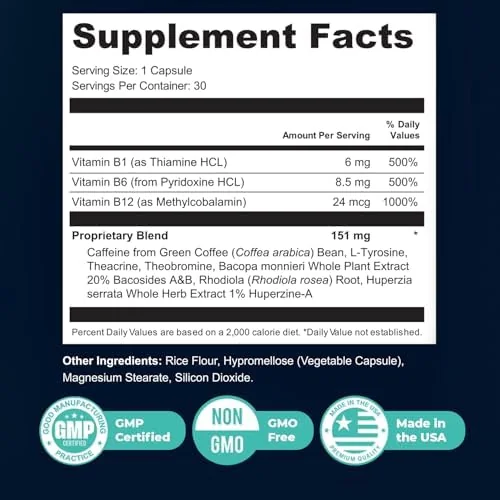
Magnesium L-threonate is a foundation ingredient. It supports the underlying environment for healthy synaptic function and, for many, sleep and calm, which are themselves cornerstones of clear thinking. It is not, on its own, a focus or same-day performance product. That is a different job, handled by actives such as Bacopa monnieri for slow-building memory support, L-theanine for calm alertness, and a modest caffeine source for drive. This is why magnesium and a nootropic stack are complements, not competitors. If you want a framework for assembling the pieces sensibly, our nootropic supplement buyer's guide walks through how foundation nutrients and active ingredients fit together, and our roundup of the best brain supplements to consider in 2026 shows where each piece sits. For a ready-built, disclosed example of the active side of that equation, the ingredient breakdown on our Memo Matrix page lays out each component and the state of its evidence.
Frequently asked questions
What are the brain benefits of magnesium L-threonate?
Magnesium L-threonate is prized because, unlike common magnesium forms, it is designed to raise magnesium levels within the brain by crossing the blood-brain barrier more readily. Brain magnesium supports the receptors involved in learning and memory. In practice, a randomized double-blind trial reported effects on cognition and sleep quality, while most of the more dramatic findings come from animal models rather than humans, so the human benefits are best described as promising but modest.
What is the correct magnesium L-threonate dosage?
The typical dose used with Magtein is about 1,500 to 2,000 mg of magnesium L-threonate per day, which supplies roughly 100 to 145 mg of elemental magnesium. It is usually split into two or three servings taken with food, with a portion often taken in the evening because of the sleep angle. Follow the label and start at the lower end to gauge tolerance.
Does magnesium L-threonate have side effects?
For most healthy adults it is well tolerated. Side effects are dose-dependent and usually digestive, such as loose stools, nausea or stomach discomfort, and taking it with food and splitting the dose helps. Some people notice headaches or drowsiness. Anyone with kidney disease needs medical supervision because impaired kidneys cannot clear excess magnesium, and anyone on medication should check with a clinician first.
How long does magnesium L-threonate take to work?
Effects on sleep and a sense of calm can appear within the first days to a couple of weeks for some people, since evening magnesium may support relaxation. Cognitive benefits, where they occur, build more gradually over several weeks of consistent daily use as brain magnesium status improves. As with most nutrients, it works best taken steadily rather than occasionally, and results vary from person to person.
Scientific references
- NIH Office of Dietary Supplements — Magnesium fact sheet for health professionals
- Liu G. et al. — Efficacy and safety of MMFS-01, a synapse density enhancer, for treating cognitive impairment in older adults: a randomized, double-blind, placebo-controlled trial, Journal of Alzheimer's Disease (2016)
- Zhang C. et al. — A Magtein, magnesium L-threonate, based formula improves brain cognitive functions in healthy Chinese adults, Nutrients (2022)
- NIH NCCIH — Cognitive function, dementia and dietary supplements
- Slutsky I. et al. — Enhancement of learning and memory by elevating brain magnesium, Neuron (2010)
- FTC — Health Products Compliance Guidance

Add a disclosed active stack to your foundation
Bacopa, Rhodiola, L-tyrosine and Huperzine-A with a green-coffee energy blend, every amount published rather than buried in a blend. Check the bundles and 60-day money-back guarantee on the official store.
View Memo Matrix Options